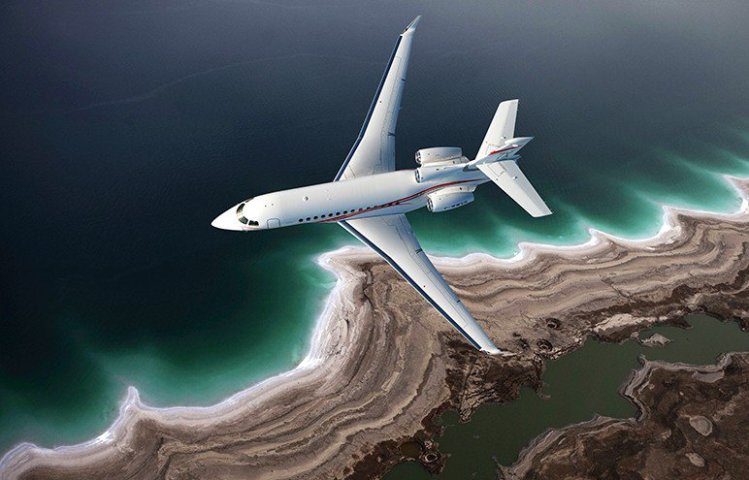
My first long term gig on the Falcon 7X
Let me begin by saying it is not an easy transition from commercial to corporate flying. All of those years of experience make your safety skills reflexive and your skin is already thick from dealing with people. After that, you need to put your ideas of experience aside and get ready to learn a whole new game. The difficulty level ratchets up a notch because a lot of folks in private aviation have no desire to hire someone with a commercial flying background. Some of that is understandable since some commercial flight attendants show up on the scene acting like they know everything there is to know about aviation and are only too glad to tell you so. There’s also the sticking point of teaching old dogs new tricks. Some just can’t change their mindset from crowd control to bespoke service. For whatever reason, you hit roadblocks right away. The best way to convey that you have the right frame of mind is to immerse yourself in quality training. That costs a good chunk of money. I call it “pay-to-play,” but if you don’t have the proper pedigree for private aviation on your resume you might as well just file that resume in the circular file yourself.
In commercial aviation, advancement depends solely on seniority. You can have the best personal record, full of accolades and commendations, but you will never get a promotion because of it. The up side of that is flight attendants in commercial aviation have a great camaraderie and trust and look out for each other.
Private aviation is extremely competitive. You are not the only one who looks at that job/lifestyle and thinks it looks like a good idea. There are always people nipping at your heels trying to get a break. Even the ones who have made it to the top and are flying great jobs always have one eye looking over their shoulder to watch others in their orbit. If they see someone getting really strong, rather than form an alliance that makes everyone stronger and helps everyone in their career, the reaction is more likely to be to try to find a way to eliminate that person from the competition. I know that’s how the real world works, but it took some adjustment to learn how to survive. If you are being interviewed for a job and appear too strong and resourceful, you are less likely to get that job because you will pose a threat to those already there. Let the learning begin.
I did my first corporate training at Alteon, a Boeing company, which no longer offers training. I admit, I wondered how much they could really teach me about in-flight safety after all of my years of training, but off I went.
My mouth was immediately shut after day one. The training in private aviation is far more detailed and focused than commercial training. Why? Well, you are training to protect CEOs and world leaders and they take their wellbeing very seriously. The classes are smaller, which helps. There is also a lot more money in private aviation, so their toys are better.
The mock-ups where we would practice scenarios of emergency situations were fully enclosed fuselages with real aircraft interiors. The mock-up was a full motion mock-up, like a flight simulator. When you practiced a landing emergency the whole plane rocked while you tried to prepare it for the situation. It might come to rest at an awkward angle so you had to evacuate it by balancing on seats and crawling. The scenarios were challenging and had a unique focus since we were training to handle situations on our own, not with other flight attendants to assist.
My favorite part at Alteon was spending a little time in a flight simulator with an instructor. It was so empowering to learn where a few of the critical buttons were in the cockpit and get a feel for the instruments. Each of us would practice landing a large private aircraft (we used a B737 sim) after contacting folks at the the tower to be talked in. You felt how the aircraft would react to the different controls, how to reduce the speed and change the headings and then finally touch down on a runway. I admit, my first attempt was more of a splat than a touchdown, but aside from eliminating some grass and runway lights, I kept her upright and got her stopped without destruction so I called that good!
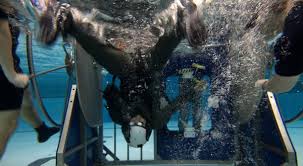
Over the years the training industry has narrowed down to two widely accepted and accredited players: Flight Safety and FACTS. While neither one puts you in a flight simulator, I did have the opportunity to experience the “dunk tank” when doing ditching training at the pool which was outstanding for honing the skills to stay calm and maintain good situational awareness in an accident.
We learned wilderness survival techniques which were incredibly relevant since a lot of private jets fly to very remote locations and often pass over the poles to make good time. Help does not always arrive quickly.
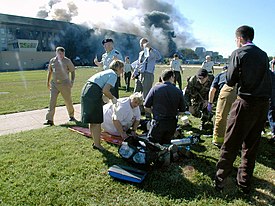
The difficult decisions necessary when triaging after an accident and understanding how to keep people alive were skills added that had to be sharp. Of course we all knew the first one saved on a private jet (wink) would be the owner or principal. Our lighthearted banter would help us through the realization that we would be very alone most likely, and getting a jet on the ground is just the beginning of the emergency.
So the safety training was amazing and sobering and I learned a lot but I knew I was only part way through learning my new craft.
I had to learn how to perform the job itself in the manner expected. I chose the Corporate School of Etiquette in Santa Ana California to help me refine my skills for a private jet. The training was amazing and I have returned a few times for their Advanced Culinary classes to keep my skills sharp. The culinary section was taught by a Chef who graduated from Le Cordon Bleu and trained at the Culinary Institute of America. It was incredible fun and so enlightening to spend a few days in class with a Chef who taught us fabulous things to whip up in a small aircraft galley with limited time. Everything from proper knife skills to plating and presentation were covered and my confidence grew as I developed an understanding of the options I had at my fingertips on a private jet. In commercial aviation, you show up, the food is loaded on the plane, you heat and serve it and then pick it up. Done. On a private jet, you examine the passengers’ profiles that are provided and then develop a menu plan around their preferences. Then you compile a clear, detailed shopping list and catering order to achieve your goals. You have to learn how to craft an order for the professional caterers (or sometimes Chef in the hotel) and how to communicate them so there will be no disappointments when you are in flight and prepping. We learned how to write a proper menu for each service that would make our offerings sound appealing and not fall flat on delivery.
The etiquette classes were fascinating to not only learn the nuances of formal service but to prepare you for the clientele in this elite world. Our teacher had studied at the Protocol School of Washington and helped us understand the complexities of serving high level business people in a global environment.
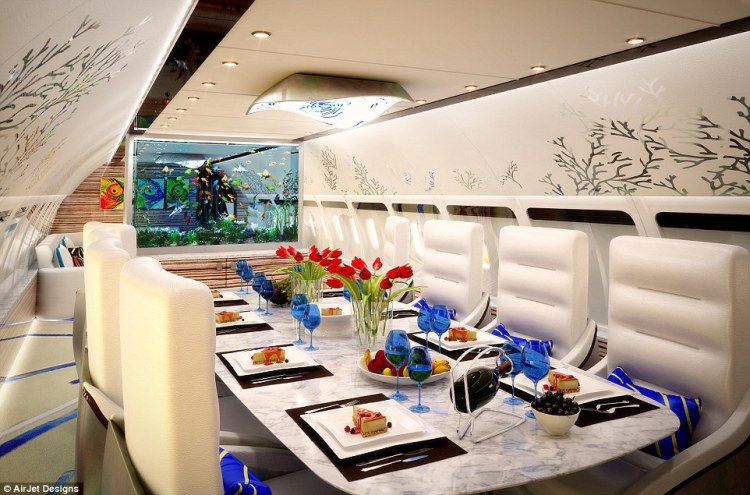
Finally there was an In Flight Service section to the course where you put everything together. This was really helpful for me because service on a private jet in no way resembles what goes on in the cabin of a commercial plane. I learned a whole new vocabulary that is unique to private aviation. I remember glazing over when they started talking about FBOs and line service. Those roughly translate into the terminal and the amazing folks who are your lifeline on the ground and rush over to help you whenever you pull up so you are ready to go when necessary and make you look good in the process.
OK, no more landing at “airports” and “guys on the ramp” in my vocabulary after some indoctrination to this new world and I was getting comfortable. Then I had to learn how to actually work through a normal day which requires shopping, cleaning, staging, prepping food and organizing it on the aircraft to finally serving my guests and then cleaning again. My biggest lesson learned sounds simple when you pare it down to its roots, but it was the pivot in my career that I so needed to make the transition. On my test flight (in the simulator) my instructor told me to stop talking. That was it. The most profound insight that turned on the lightbulb for me. In commercial aviation, passengers decide if you are working hard or really trying by noticing how much you are out and about in the cabin engaging with passengers.
In private aviation, the guests really don’t want to talk to you. It’s not personal but they are incredibly busy or need a few moments away from the crowd and they really don’t want to chat. They have not hired a new friend. The goal is to remain available but invisible. I mean who is really comfortable sitting in their living room or board room with the help hovering around?
This took some getting used to after years needing to be “out there,” and it took a little while before I was completely comfortable with closing the door in the galley and staying out of their space. I also had to sharpen my observation skills since they don’t want you asking if they need more water or ice, rather you should simply notice and provide it. After your guest requests more ice, for example, you should never have to ask if they care for more, but as you pass through the cabin observe when the beverage reaches the same point as it did last time they requested more ice and silently bring a glass with additional ice to them. It’s the small stuff, the fine detail that takes your service to the next level.
With some great training under my belt and a world of new knowledge I set out on my newly chosen career. Ready or not, I went out and looked for a job. Sadly, my career path followed what I found to be the norm, it took over 6 months to convince someone to give me a try. Private flying is like any other profession, they only want to hire people with a proven track record on top private jets. When I took that into consideration along with the sheer number of competitors for the few positions, I knew I had to distinguish myself from the pack. I decided to combine my passions into a specialty segment for the less than 1% and developed my own company addressing some unmet needs. My career developed legs, four legs to be exact…
 Whitefish Dog and Home