First World Homeless

DSC_0001

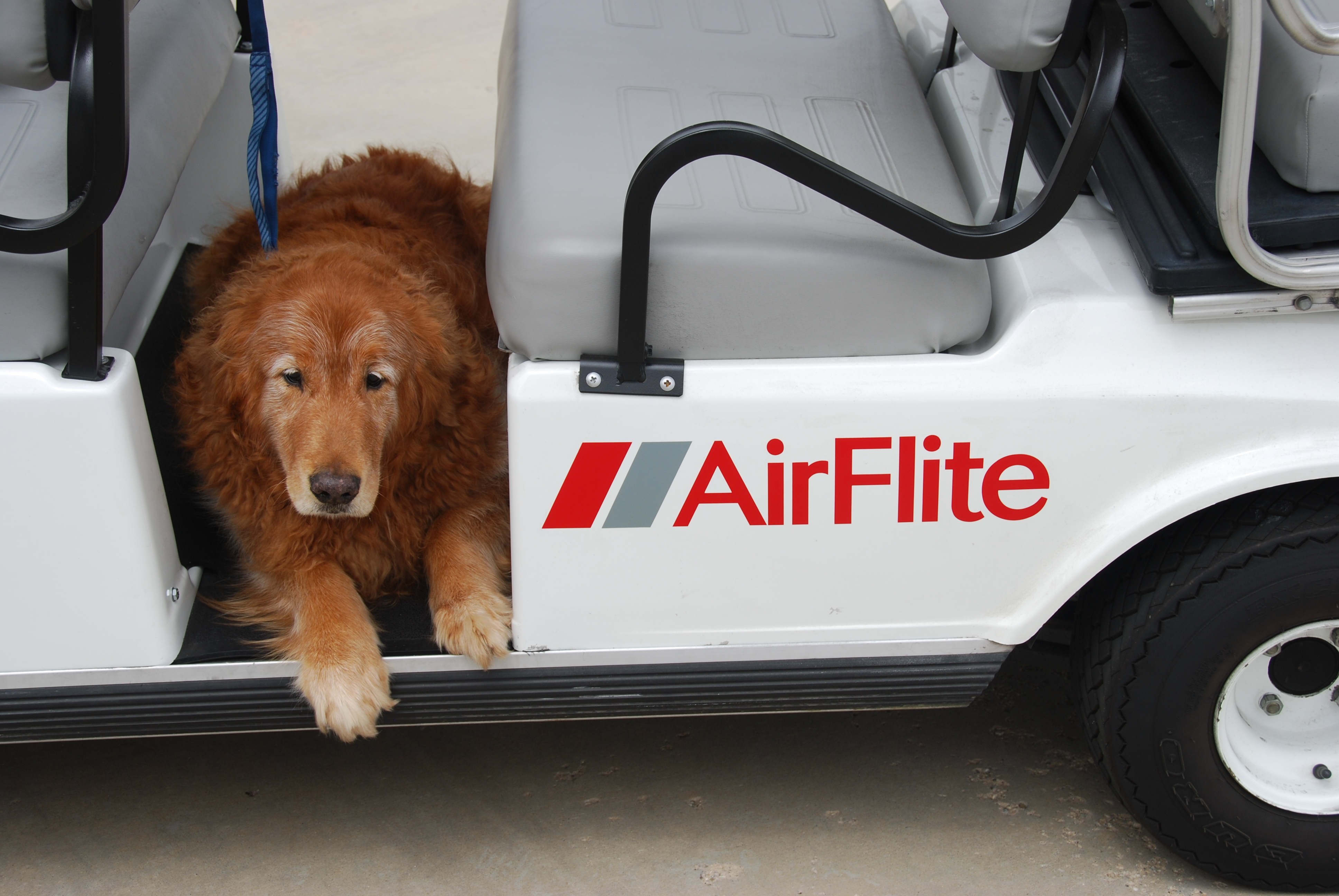
I know, when you think about people that lose their homes and sleep in their car, this isn’t the vision that comes to mind. It can happen to anyone and any car, trust me.

Having a contract for a full time gig was not job security. When a new management company opted for a different flight attendant and let me go, I was back out in the contract crew member market. While the San Francisco Bay area was a target rich environment for work, it was also the most expensive housing market in the country. I had been fortunate to snag a 700 square foot dream cottage in Carmel to the tune of $3,000/month. That was actually more reasonable than if I had tried to live up near Silicon Valley (where I worked) and a lot more beautiful. It wasn’t beyond my means, since a full time corporate flight attendant in the Bay Area earned over $100,000/year. It also didn’t leave a lot of money for saving. That was the reality of living on the West Coast.
DSC_0145

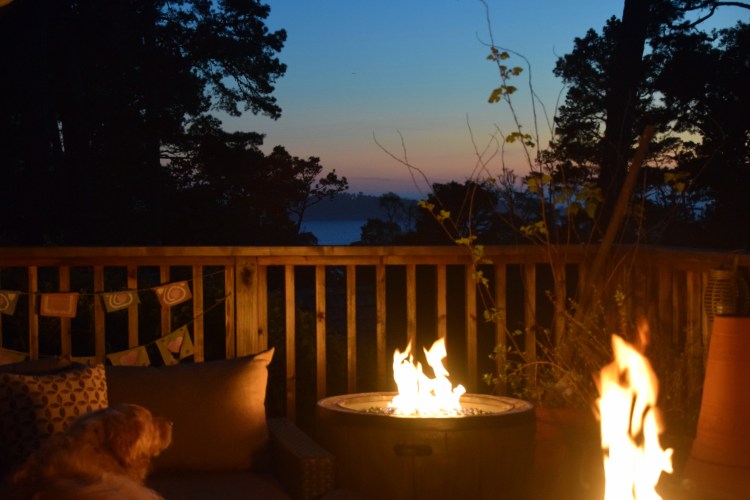
Living the dream in Carmel

The contract crew member market is extremely competitive since very few operators hire full time flight attendants and most crew are independent contractors available to numerous clients. Prior to going full time, I had a client list that kept me busy after working my way to the top of the list of contractors. My reputation and experience made me marketable and work came regularly.

After stepping away from the contract market and flying for one client for a few years, new people populated the go-to contract flight attendant list and clients had moved on. I was grateful that old clients would send me a trip when they needed extra help, but the work was not regular enough to support that lifestyle. With very little money coming in virtually overnight, I started going through my savings to cover the basic expenses. I wasn’t too concerned at first because I knew I’d be back in the saddle soon. Soon was not really in the cards as the market had grown substantially while I worked for the client I loved, and new faces had flooded the market. I had to start over and that was a slow process. Something had to give.

The reality was hitting that I had to find a cheaper way to live. I began eyeing nice little back alleys and under footbridges where I could park while out walking with my dog every day. I knew, however, that the Carmel police were vigilant and I couldn’t park my car where it did not belong for long. Scanning Craigslist every day for the entire Bay area was not turning up a viable solution. I took one more hit to my income and I knew the gig was up. That’s ok, I love camping and I’ll figure it out.

I was fortunate I had plenty of friends I knew would take me in, but really? My reluctance to admit that as a highly educated and successful professional I had let my situation get to that point kept me in hiding. I gave my notice at my cottage, put everything in storage and set out in my car with my dog. I felt lucky that I lived in such a beautiful part of the country that I had lovely options for parking.
DSC_2162

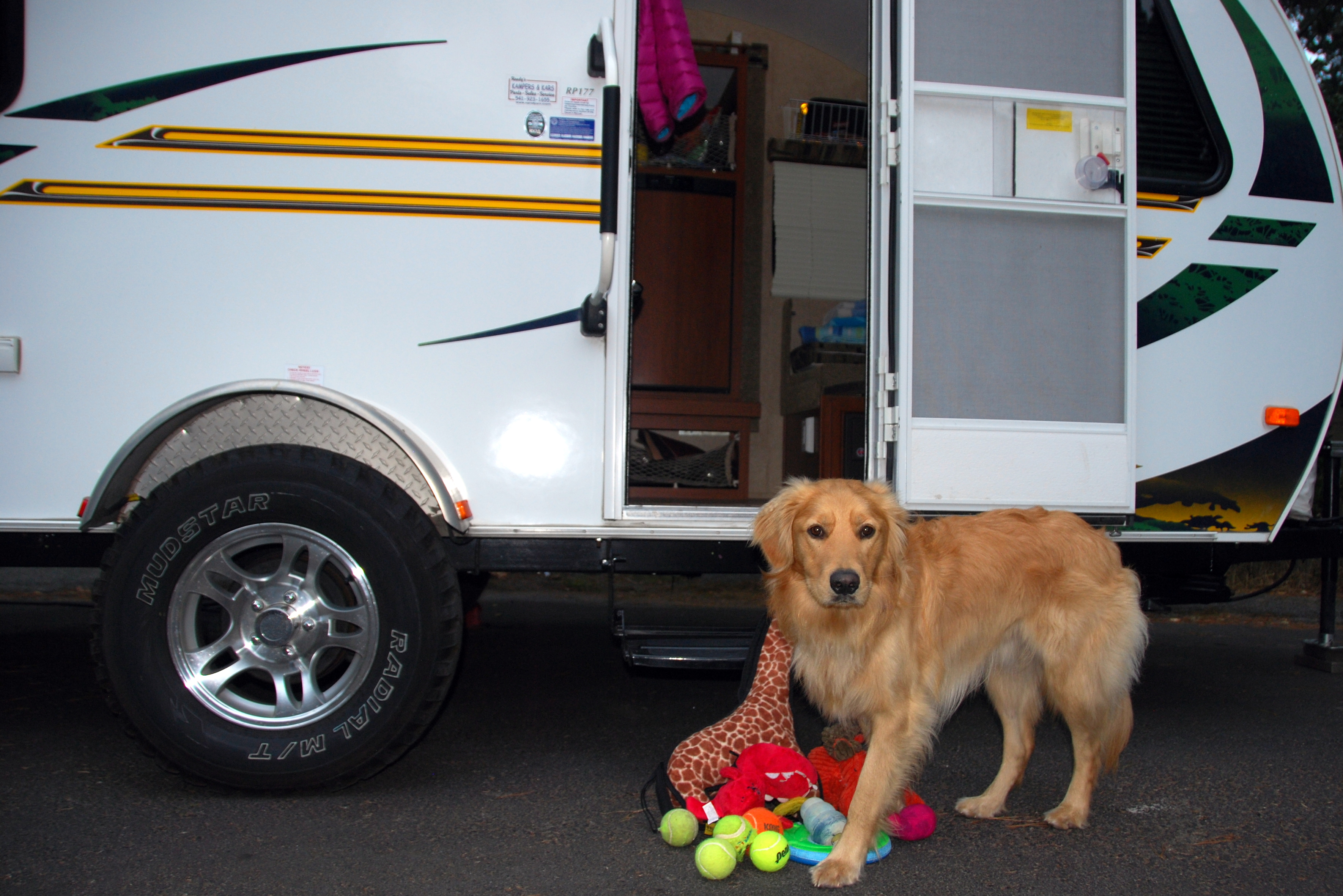
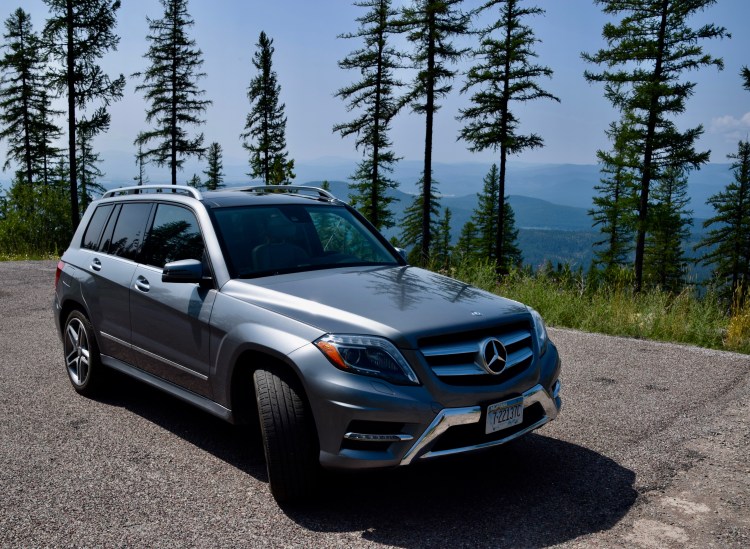
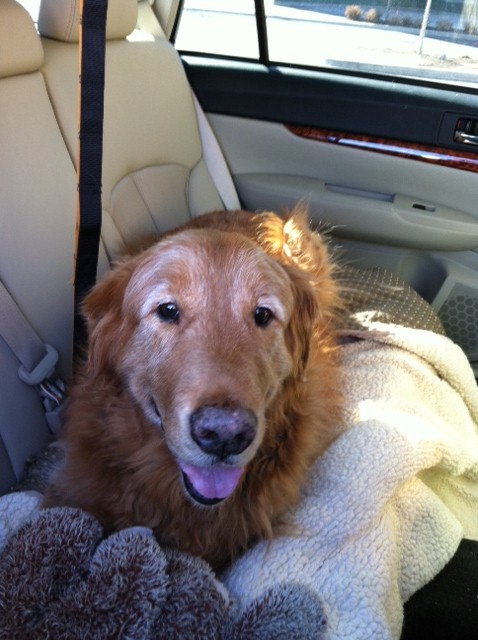
Sadly my suspicions about the values of the world were confirmed. I was fortunate, but it was disappointing as well. I figured the authorities wouldn’t bother a clean, nicely dressed woman in a Mercedes at a rest stop. I was right. I would take my travel toiletries into the rest room in the evening, wash up and get ready for bed and then retire in the back of my SUV with my dog. I would park between two big rigs if possible for security. My dog had a great bed set up full time in the back of the car, so I just added some memory foam and a pillow to the remaining space and settled in.

IMG_2511

Have bed, will travel!

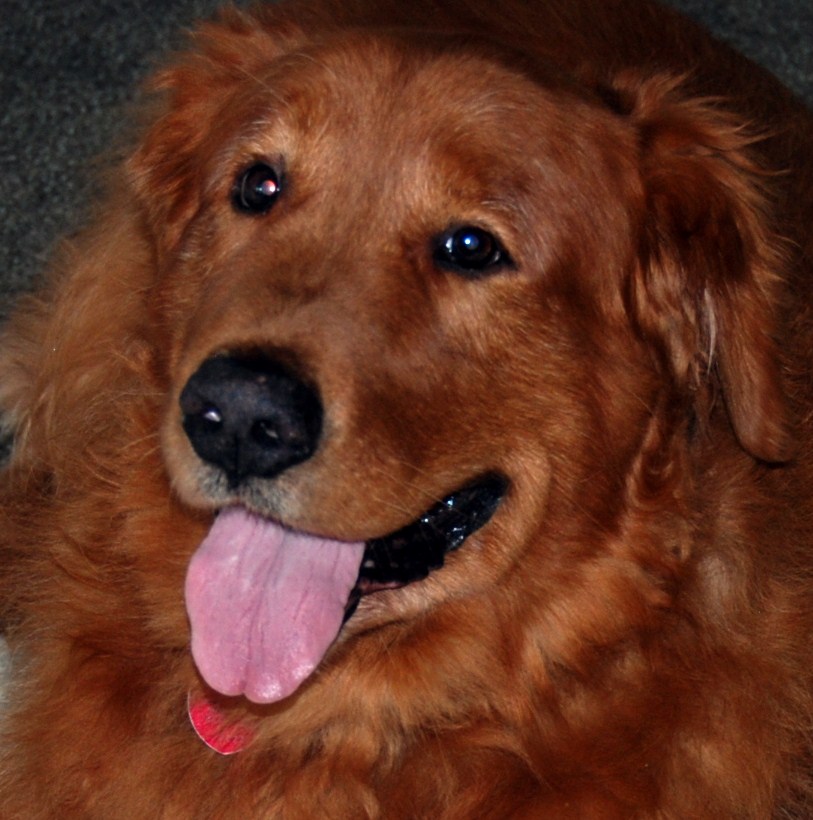
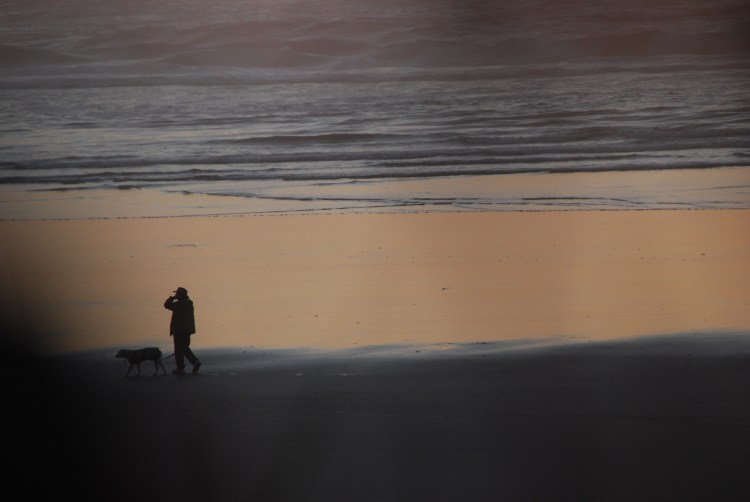
During the day, Maxx and I would go on great hikes and stop at lakes for him to swim. It was my goal that his life remain as normal as possible. After his play, we would sit outside for hours at a Starbucks or McDonalds and use the wifi to apply for work online and look for new options. I ate a lot of high protein energy bars for meals but kept his diet the same. I would check in with friends on Facebook and maintain a normal public persona and nobody knew.

I called this “First World Homeless” because I knew I was lucky and had options. I had a car. I looked normal, like I was just out on adventure. This ultimately tore my heart out because I was very conscious of the benefits white, affluent privilege was affording me. I knew that if I had tried that in an old Chevy with cardboard over one of the windows and wore the same old clothes for days because they were all I had; I would have been rousted at the first stop. The very people who had no hope and no options and needed a place to rest the most were denied that privilege. My handsome Golden Retriever did not attract the attention a Rottweiler or Pit Bull might have, we were invisible. We were allowed to cruise under the radar because we looked like something society was comfortable with. I was crushed. I would see the look in the truly hopeless eyes of those waiting outside of gas stations or Target for even a little help. They always expected help from me after I parked my Mercedes to fill up with gas. I began giving meals and dog food and dog toys to these people and handing out a dollar to everyone at every stop sign that was begging. I had to give up some things to do that, but the inequity was horrible, and I could not fancy myself to be above it. I no longer could pretend not to notice. I had no right to call myself “homeless” in any fashion and began referring to myself as “between places” if asked. I always felt like I would come out the other side and the true homeless had lost that hope.

Finally, I did come out the other side. I got hired by an extremely wealthy and prominent gentleman in Dallas to join his flight crew roster. That was perfect for me since I had lived in Dallas for over 15 years and still had a lot of friends there and a great support system. One of my dearest friends from my initial flight attendant training invited Maxx and me to stay in her guest room while I got my feet back on the ground. There aren’t a lot of people who would take a roommate on at this age, especially one with a dog. I was beyond blessed and I knew it. I pointed my car south and hit the road. I tapped into my bank of Marriott points that I had accumulated as a flight attendant and stayed in Marriotts on the trip. It felt like pure luxury. I would load up at the free breakfast and bring eggs and bacon back to the room for Maxx every morning. After hitting the bread, peanut butter and jelly, I’d make a sandwich for lunch on the road and I was almost set. A few pieces of fruit and some bottled water and we would be good for the day. At the end of the day, due to my elite platinum status, I could visit the concierge lounge and make dinner out of the offerings and enjoy a civilized glass of wine. I looked just like any business person stopping in at the end of the day. It worked…

My time in Dallas was great to reconnect with my friends down there and catch my breath. The flying just wasn’t panning out to be enough to sustain me and the market did not have as many openings as California did. As I was contemplating a plan C, I got a call from one of the large companies I had interviewed with in Oakland months earlier. They were ready to take on some new flight attendants and wanted me. Not seeing many options in Dallas, I thanked my dear friend for the extended visit and pointed the car back North and West. Another friend took us in when we got back in town until the money started coming in steadily and I could get my own place again. We had weathered the storm.

I’m grateful for the storm. I learned so much.

I was grateful for the karma that clearly flowed back to me during my time of need. I was humbled and frightened by the incredible umbrella of privilege I lived under and became passionate about being aware of that and trying to undo the eons of discrimination I had unknowingly been nurtured by.

I reached back and offered a hand to mentor those coming along behind me in aviation rather than just continue my own climb up the ladder unladen.

Why did I throw this in to the story and not leave it hidden?

Because my experience was not a unique one for corporate flight attendants. It has happened to others. My heart breaks at just selling the dream of flying around with the rich and famous and living a private jet lifestyle to others. There is a much bigger picture and very few achieve the dream unscathed.

The flight crews are predominantly contract workers employed at will and can be let go any time. What is alarming is that you typically don’t get fired for just doing a bad job or showing up late. Typically, the axe falls because one pilot decides you offended him, or a new management company takes over and prefers younger crew. It can happen overnight and then you are on your own again.

I want to make sure that people reading about my amazing career opportunities know that when it is good, it is very, very good. You must be pragmatic, though, and always prepare for the bad. It’s truly an all-or-nothing business. You pay to play and then enter at your own risk.
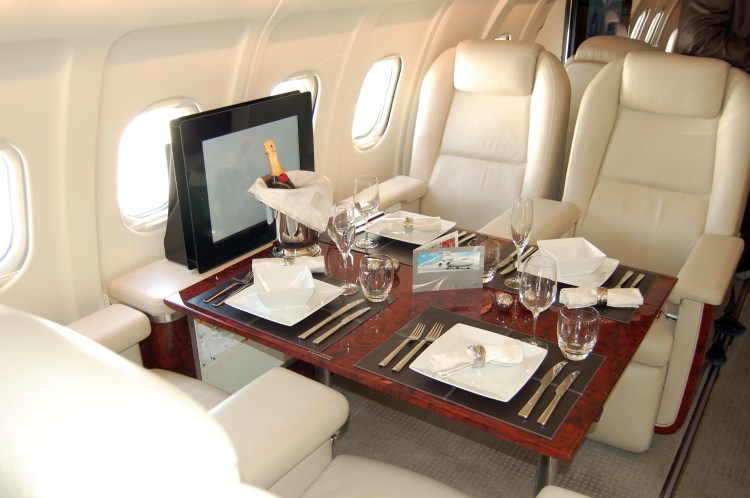
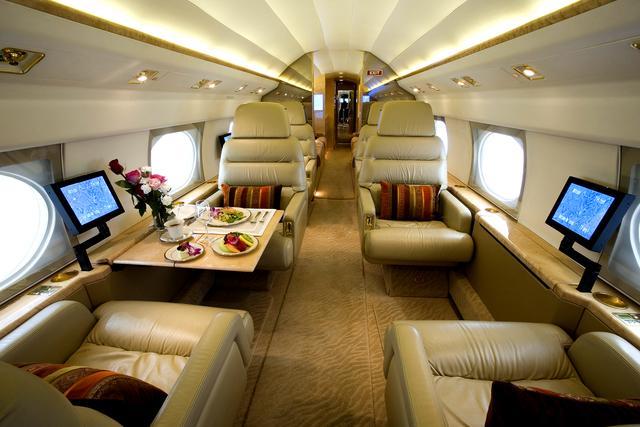
Passanger Cabin

The good was so good that I went back in and had a few more years of fabulous experiences. I was back in the air and experiencing the world like I had never left. I had a renewed appreciation for every opportunity that came my way and made sure I didn’t miss a thing. The journey continued.
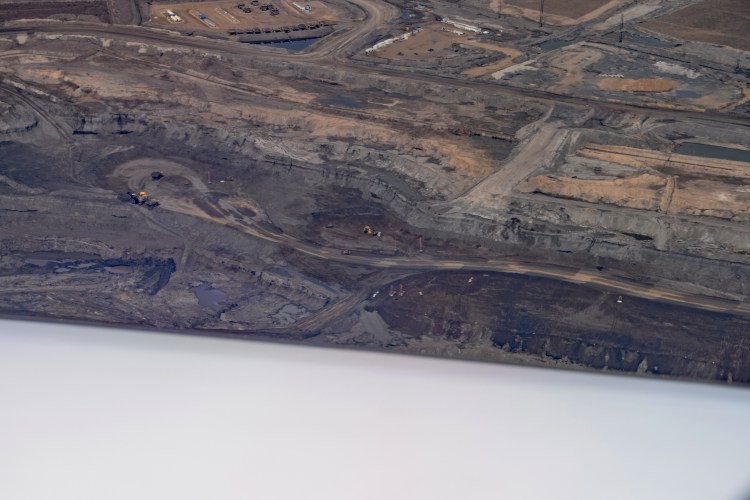
(Oil) Sands of Time

My new flying consisted mostly of work between a major oil company and a global payments technology company that was “everywhere I wanted to be.” Both had great flight departments that were completely different in personality and my learning continued.

The oil company got me back into the deepest darkest reaches of Africa and other intriguing places. The most fascinating trip I helped with was up to Calgary to pick up some of the Canadian executives of the firm and take them out to the oil fields in Ft. MacMurray for an inspection.

I remembered Ft. Mac as a place that was ravaged by wildfires in the summer of 2016. It is located in Northeast Alberta on the Athabasca Oil Sands, a region that is instrumental in Canada’s rise in prominence in the oil industry. I knew they used fracking to extract the oil from the sands and tar pits, but I admit I had only heard the controversy about fracking in the news and wasn’t aware of how the process worked. That was about to change.
We spent a night in Calgary so we could get going early the next day. The flight was a little over an hour, so I planned a quick breakfast for the trip over. I met with the chef in the hotel to get recommendations for the favored local microbrews for the the trip back and some interesting snacks. The in-house prepared thick cut fresh potato chips were worth the effort along with some sliders and the group enjoyed my thoughtful offerings immensely.

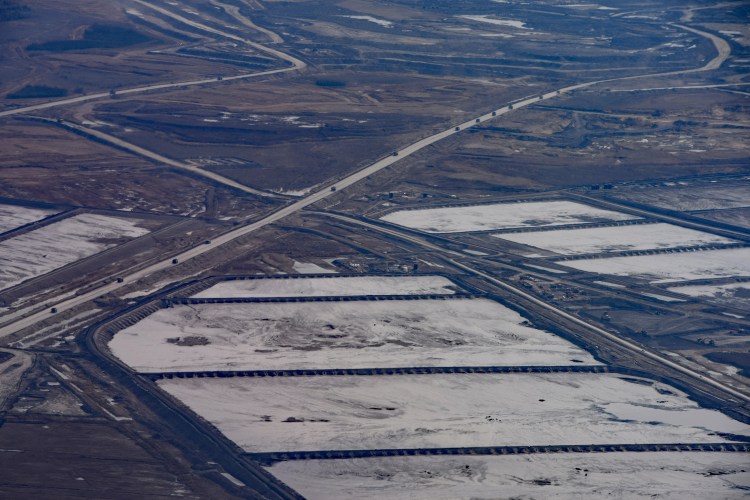
As we began our descent into Ft. Mac, I grabbed a window to see what this operation looked like. It was like landing on another planet. I was prepared for the industrial nature of the infrastructure, but the vast barren area shocked the senses.

Pit w leading edge

Oil Sands Village

We flew in low over the pits and the plant that processes the extracted material. The enormity of the operation and the scar it leaves was astonishing. As we landed and rolled out on the runway, I watched the trees of the surrounding forest flash by. Many were nude and others were bleached white. Nothing about those “trees” looked normal. I was curious about their condition.

My guests donned heavy boots and left for the tour. Our crew stayed on the aircraft and prepared it for the trip back. When the plane was ready for the return trip, I sat down for a quick break and in the quiet I noticed an unsettling percussion every few minutes. A deep, muffled “thud” would sound and then the entire G550 would shudder. The plane actually moved. After a bit I asked the pilots about this and they shrugged and said it was probably the fracking process. As the realization set in that there were eruptions every few minutes, I began to grasp the violence of that process. I realized clearly why this procedure caused earthquakes. We were bombing the earth in a new kind of oil war.
The FBO at the field consisted of a large Quonset hut. I headed in to check it out and it seemed to be more of a military base in its starkness inside. The workers were quick to greet me, Carhartts and hard hats seemed to be the dress code. I asked one of them about the trees. The answers were disarming and ranged from questioning which trees exactly did I mean, to assurance that the trees look like that all the time and they would bloom in the Fall. I lived only 60 miles from the Canadian border for over 10 years, and it was not my experience that many trees “bloomed in the Fall.”

I quickly dropped the clearly unwanted inquiries and toured their office and headed back to the jet. Keeping my curiosity to myself, I settled in to relax to the rhythmic thuds and jolting of the aircraft until our guests returned and we would head home.

As we took off, the evaporation ponds for waste water spread out under us and the vast barren wasteland was left behind.

Oil Sand Flats

Everyone enjoyed their curated snacks on the way home and I could tell it was just another day for all concerned. I certainly learned a lot and was thankful for the chance to view the operation in person. This isn’t where I want to share opinions on controversial subjects, I was just glad to see it all for myself.

The education continued…

Dogs on a Plane

flying dog

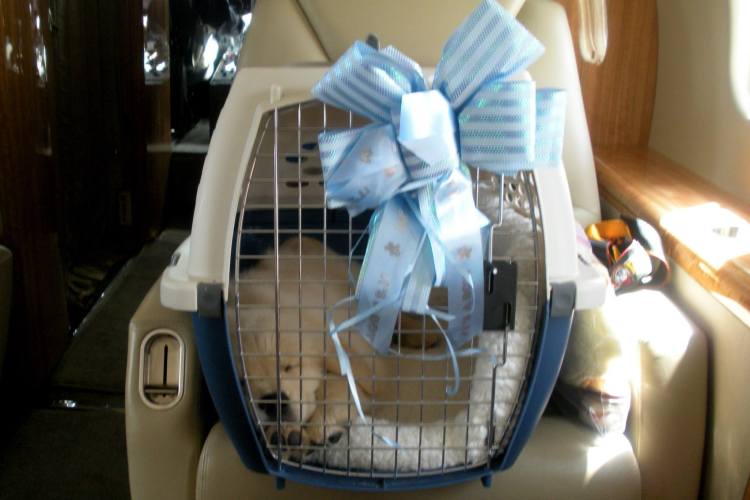
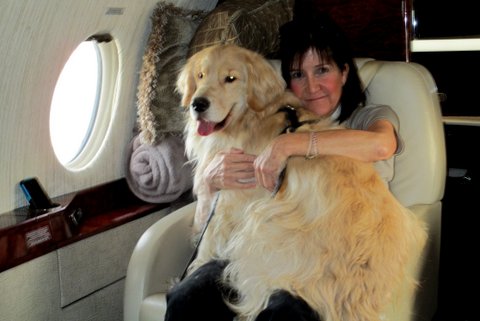
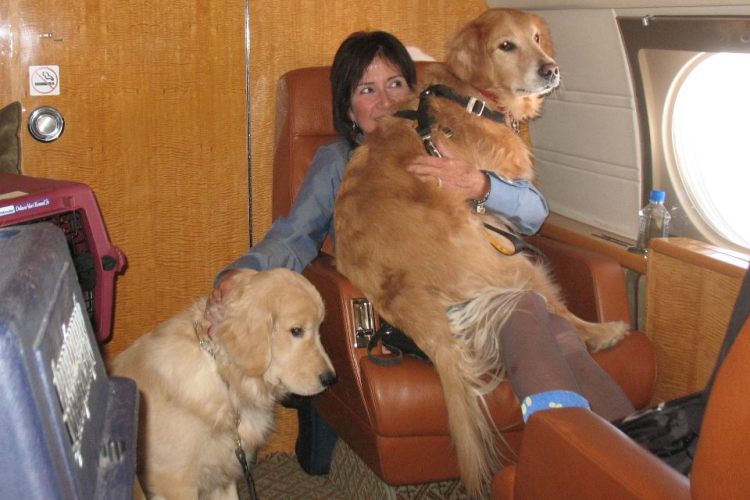
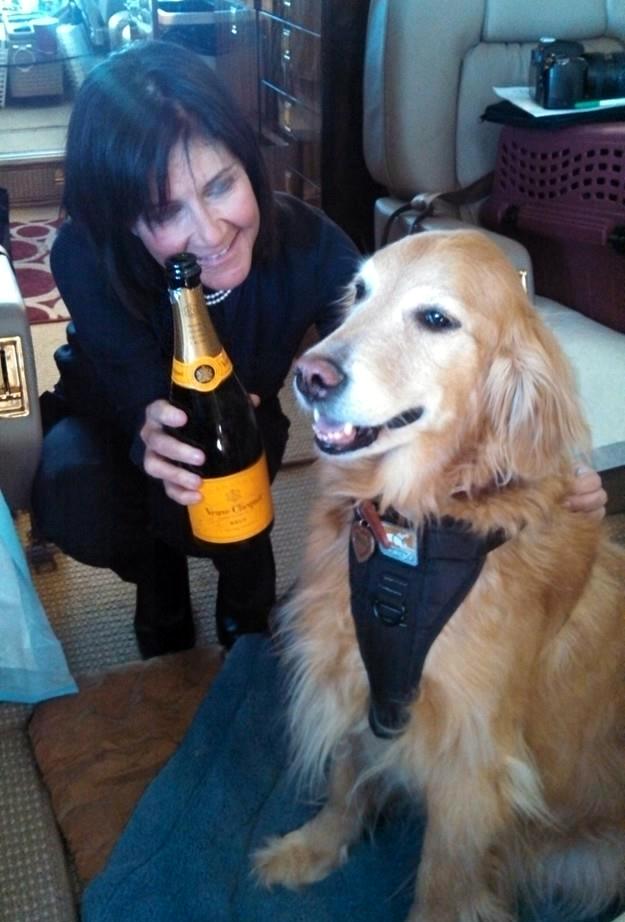
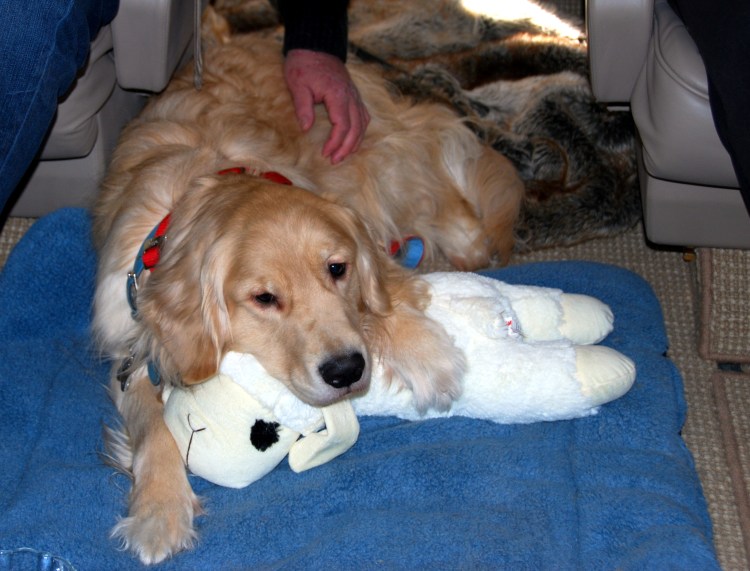
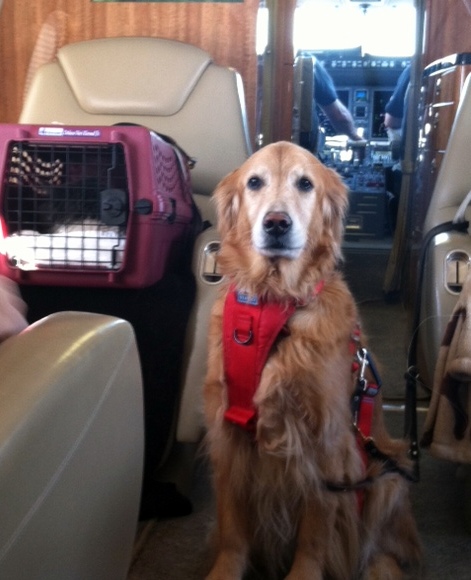
I really have to say that my favorite clients have been real animals, seriously! I had a company that specialized in flying with pets on private jets. That morphed into pet nanny duties in home and at destinations around the world. It was fabulous!! It actually helped my intuitive service skills develop because when you are trying to satisfy the needs and provide for the safety of someone without language skills, you learn to be observant and empathetic.

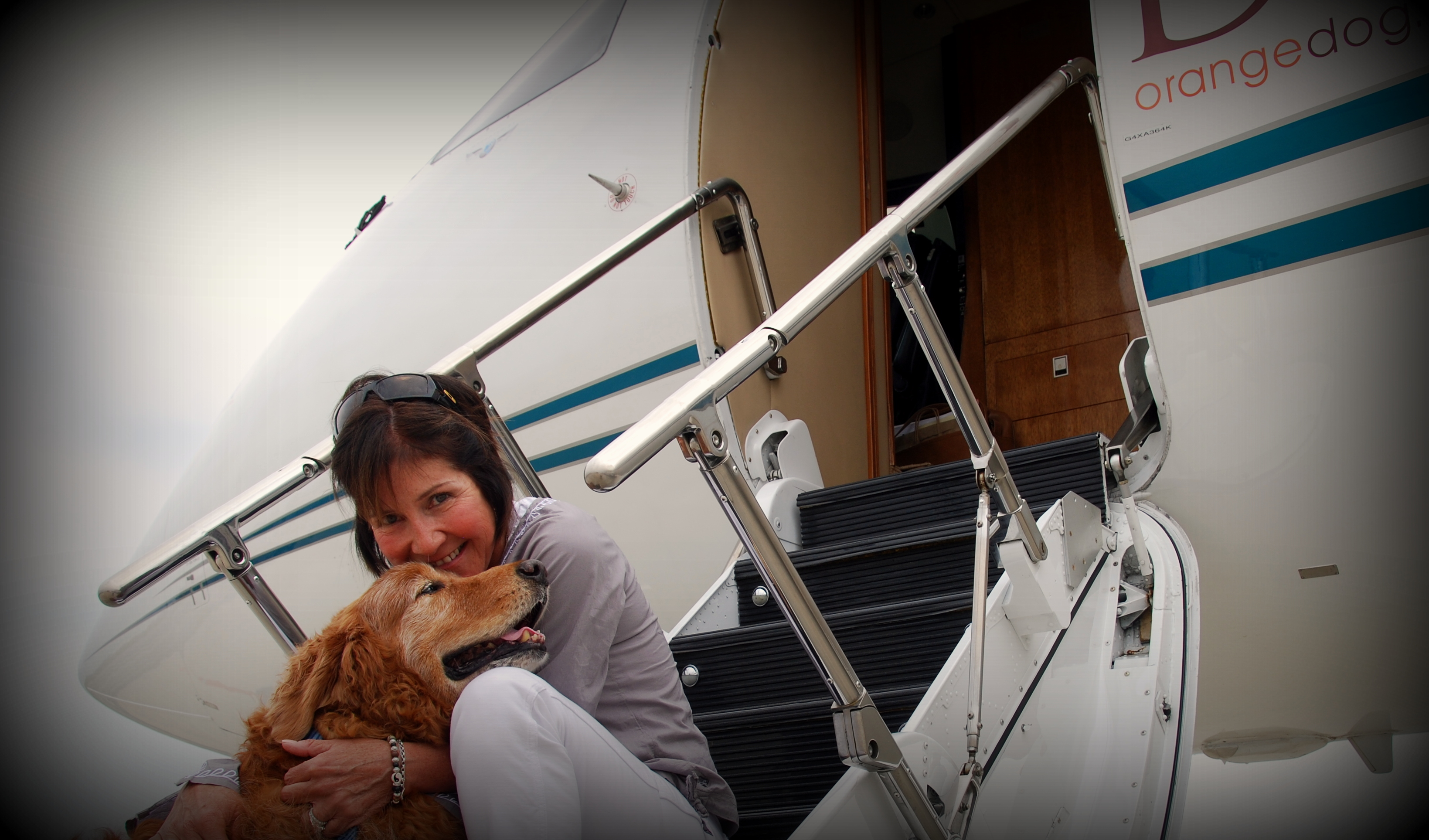
My longest-term clients were 2 Golden Retrievers and 2 cats and their humans. I have the scars to prove it! I’ll never forget the first time we met. I descended the steps of the private jet I had prepared for their flight and met the car bringing my clients to the jet. I learned some big lessons right there on the tarmac.

When I cheerfully greeted them all they only had one dog at the time, Dolce, and she was beautiful. I assured her parents that I could take her so they might focus on getting settled on the jet. They handed me the leash, Dolce flew out of the car and promptly swept me off my 4″ heels and across the ramp. How to make a great first impression right? I escorted her to a grassy area and then onto the jet while hoping nobody would notice my torn hose or bleeding knee. We got settled and I discreetly changed hose in the lav after applying a Band Aid to my wounded knee. Off we went.

Dolce Challenger

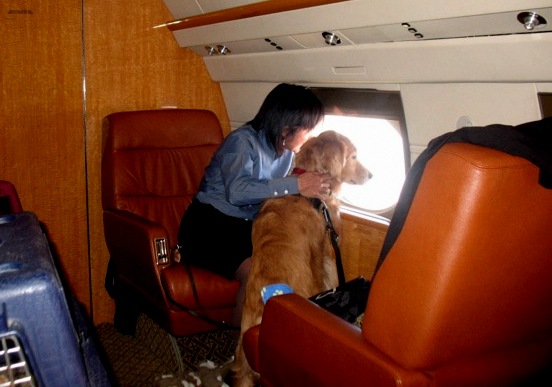
Dolce had a larger-than-life personality and she cracked me up. I usually had to keep her tethered in flight since she felt her skills were needed on the flight deck and would have spent the whole flight up there competing for window space if left to her own devices. She and I spent lots of time looking out the cabin windows, though, and she paid close attention to my running description of the land passing underneath us. She was always curious and extremely intelligent. We quickly became a team focused on her needs.

Dolce and me

Everything changed one day when we took a flight to Idaho from Monterey, CA. We landed in Idaho and got out to stretch our legs and visit the grass. Then everything changed… A woman came out of the FBO to meet Dolce’s Mom on the ramp. That woman had a small white fur ball that she handed to my client and Dolce was NOT amused. Everyone gathered around the adorable new Golden Retriever that was to join the family. Gabbana had arrived!! What the Fluff???

BabyG

Oh, this was wrong on every level. The door shut, then we taxied out and took off to head back home with that NEW DOG on board!! Dolce took one sniff and promptly chose to deny and ignore the situation. Maybe we were just giving this dog a ride?? Nope, we landed back in California and that dog was placed in the SUV that would take the newly expanded family home. Oh, not good!

Gabbana grew quickly and learned a lot from Dolce. Like how to take his seat immediately if we hit turbulence, wherever he wanted to!

IMG_2636

Dolce & Gabbana

They became my go-to critics on whether the catering was up to par.

DSC_9132

Eventually we all became family, celebrating birthdays and holidays together. I would accompany them to their homes in Michigan and Pebble Beach and we would have sleepovers while I helped as my client’s assistant and home manager. They largely ignored the cats who totally ignored them. The dynamics worked.

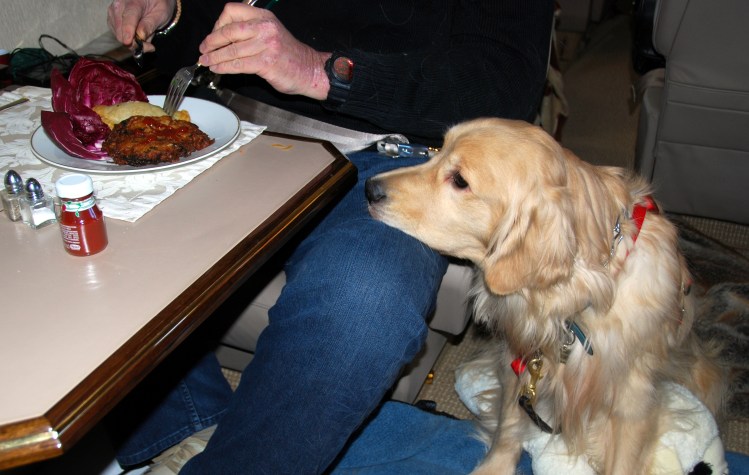
The cool thing about flying with dogs is that they always seem to like the food served… to anyone. They never try to hide when they aren’t feeling well like a lot of humans do, so if you are attentive you get a warning before they redecorate the plane. They are extremely happy if you just stop and scritch them on the head and they have simple needs. Well mostly.

Dolce Cliquout

Yes, I have to say that my favorite passengers have been animals. They are grateful for any attention or efforts and never leave the paper strewn all over the jet or wrappers in the cup holders. I learned a lot from my pet clients; like how to be grateful for small things, have simple expectations and to always sniff my food before I eat it. Perhaps they are the answer to air rage and the stress of traveling. I just always found my days more centered and satisfying when working with pets.

DSC_9130

photo-169

*In memory of Dolce, the Princess. I have no doubt she is managing and preparing the next part of the journey for the rest of us.

FL450

There are some wonderful benefits of flying up around 45,000’ (FL450) on a private jet. Most commercial jets fly in the 30,000-35,000’ range. Up there at higher altitudes the air is usually smoother and there is less traffic. You can often pick up the fast winds aloft and get some speed assist to boot. Many a day, we would hear the commercial jets calling ATC to see how the ride was at different altitudes when they experienced turbulence and they couldn’t find a smooth ride in their range. Just for grins my pilots on the Falcon 7X or Gulfstream 650 would contribute to the conversation and advise that there was a smooth ride up at FL450-500. Without fail that would be followed by radio silence and an almost audible murmur from below… “assholes.”

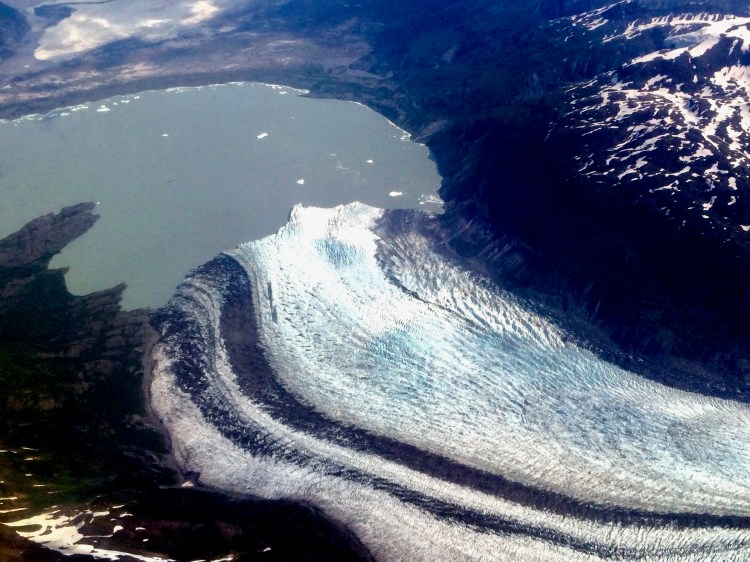
Another huge benefit from flying on jets with many huge windows (including those in the cockpit) is the spectacular view. I love to dabble in photography and learned to leave my Nikon out to catch some magnificent shots to share. My passengers would ask me to forward my images to them, and I quickly became their photographic record keeper of their journeys. Some of the most spectacular sights were along the northern route from the West Coast of the US to Western Europe. One epic summer day the view was breathtaking over Greenland:

DSC_0044

Calved GlacierDSC_0045-001

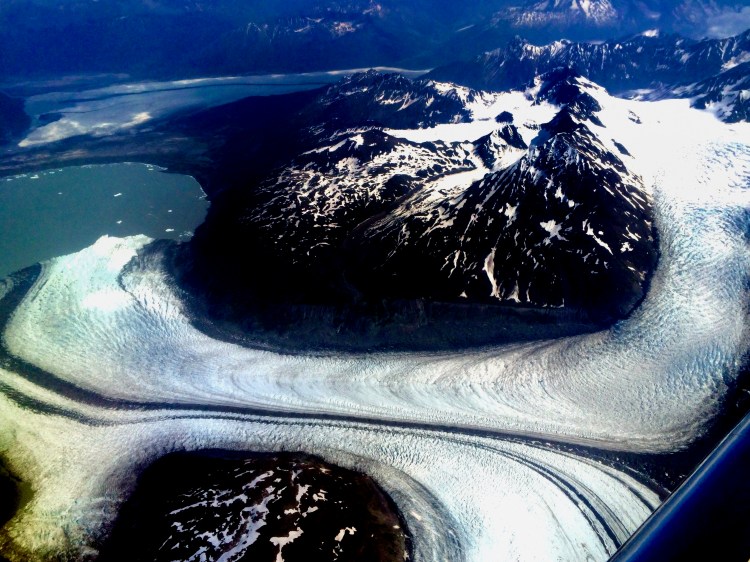
Heading up to Anchorage one day during the summer we caught a spectacular view of the Portage Glacier just outside of town as we made our approach. I had visited that glacier on the ground many times, but the all-encompassing view as we flew in low over the glacier was astounding:

IMG_1854

IMG_1856

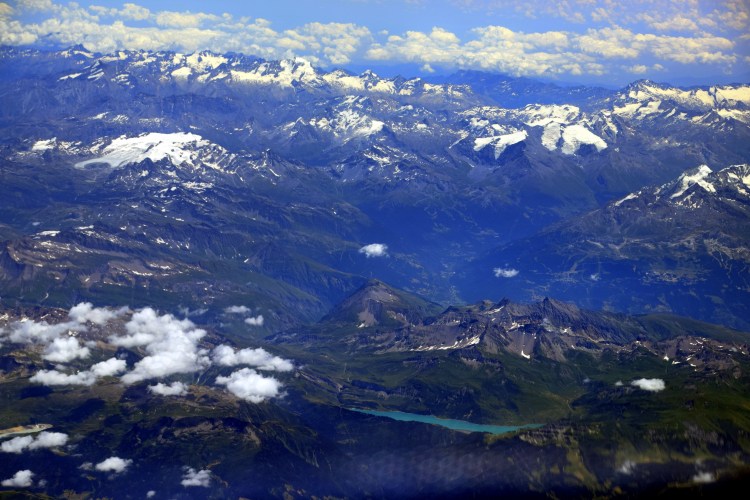
One day on a flight from London to Rome, we made a stunning pass over the Italian Alps and Lakes Lugano and Como. That was the kind of thing that made you so grateful for such an opportunity.

UNADJUSTEDNONRAW_mini_2f45

DSC_0017

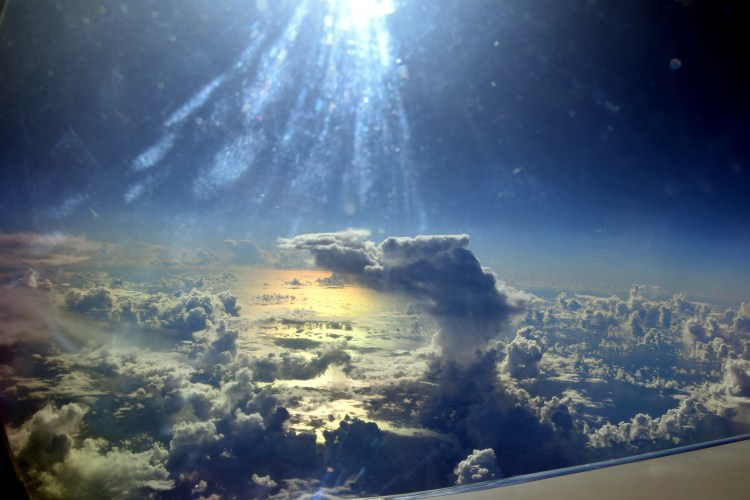
On another interesting trip to Saipan that had us airborne for over 21 hours I marveled at the simple reflection of the clouds on the South Pacific. That was such an interesting trip because my passengers were 4 security personnel accompanying $4,000,000, from the Federal Reserve in San Francisco which was needed to open a casino on the island. I’ve never seen so many armed people around a plane as surrounded us in California, until we landed in Saipan and the entire police force from the island showed up. The flight was a lot of fun because these folks did not travel privately very often and enjoyed every detail of the flight. They were real troopers! We all enjoyed the movement of the clouds over the vast landscape of ocean where they were often the only sight for hours:

DSC_0020

DSC_0021

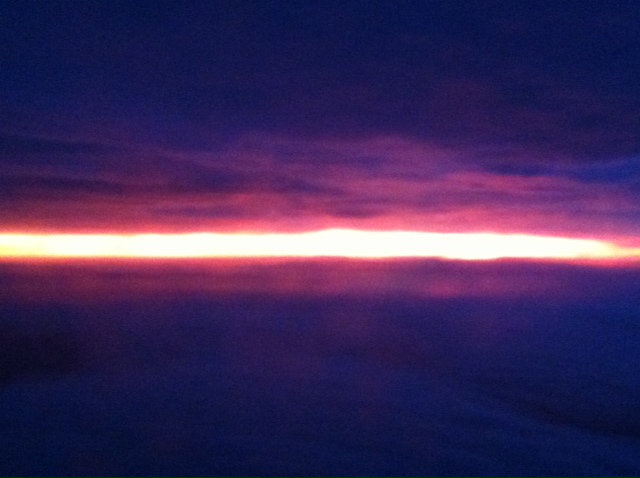
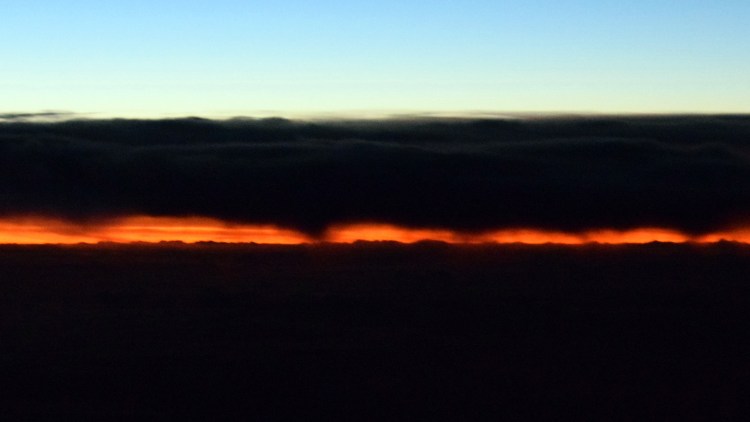
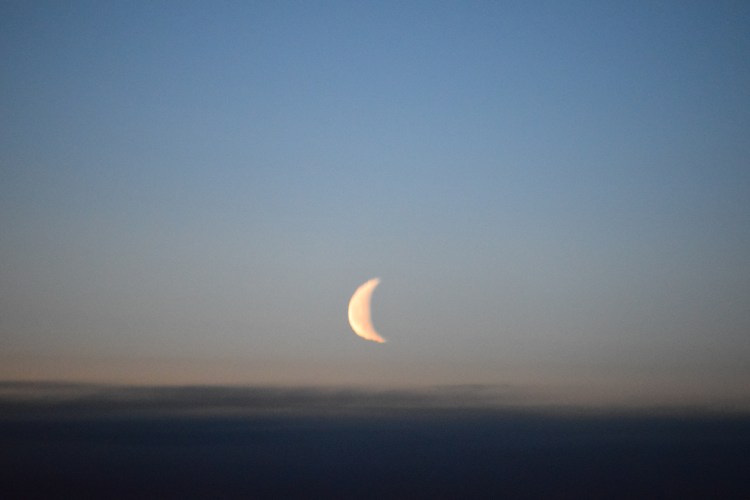
When it takes that long to get somewhere, the sun usually rises and sets a few times. That gets confusing. I finally took a picture of the rising? setting? sun between cloud layers. I got another shot of the moon either rising or setting. Day and night just blend together. I would have to check my watch to see if it was a sunrise or set, or what day it was for that matter.

photo 2-001

DSC_0067

Sun up or down? Aug 12, 2015, 10-45 PM

DSC_0001

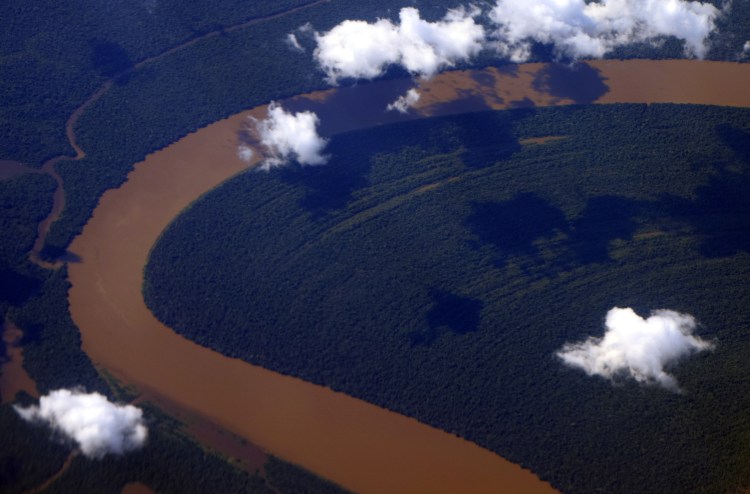
Another sight I was so amazed to see was the Amazon River from the air rather than in a book. In a way it looked smaller than you would think, but I may have been expecting a flowing superhighway that stories depict. The interesting thing was flying over that massive wilderness at night to arrive in Sao Paulo in time for meetings in the morning. We would spend hours over absolute darkness, no lights whatsoever. The pilots would have to do routine checks with ATC to verify our course like when we fly over the Atlantic to Europe. Seeing that wilderness during the day was stunning:

DSC_0069

DSC_0071

DSC_0070

After taking a client to Buffalo, NY, the crew decided to revisit Niagra Falls which none of us had done since we were kids. Wow, just wow! After catching a few good shots from the Maid of the Mist, we were treated to a completely new perspective as we climbed out after takeoff.

DSC_0252

DSC_0283

People would ask me why I liked flying private better than commercial, and these are the kinds of experiences that just are a gift every day. The world looks so peaceful from 45,000’. If only more people could look at it from that perspective. Thanks for taking a high-flying flight with me today, now you can go back there whenever you need. We need that a lot lately…

Oh! Brittania

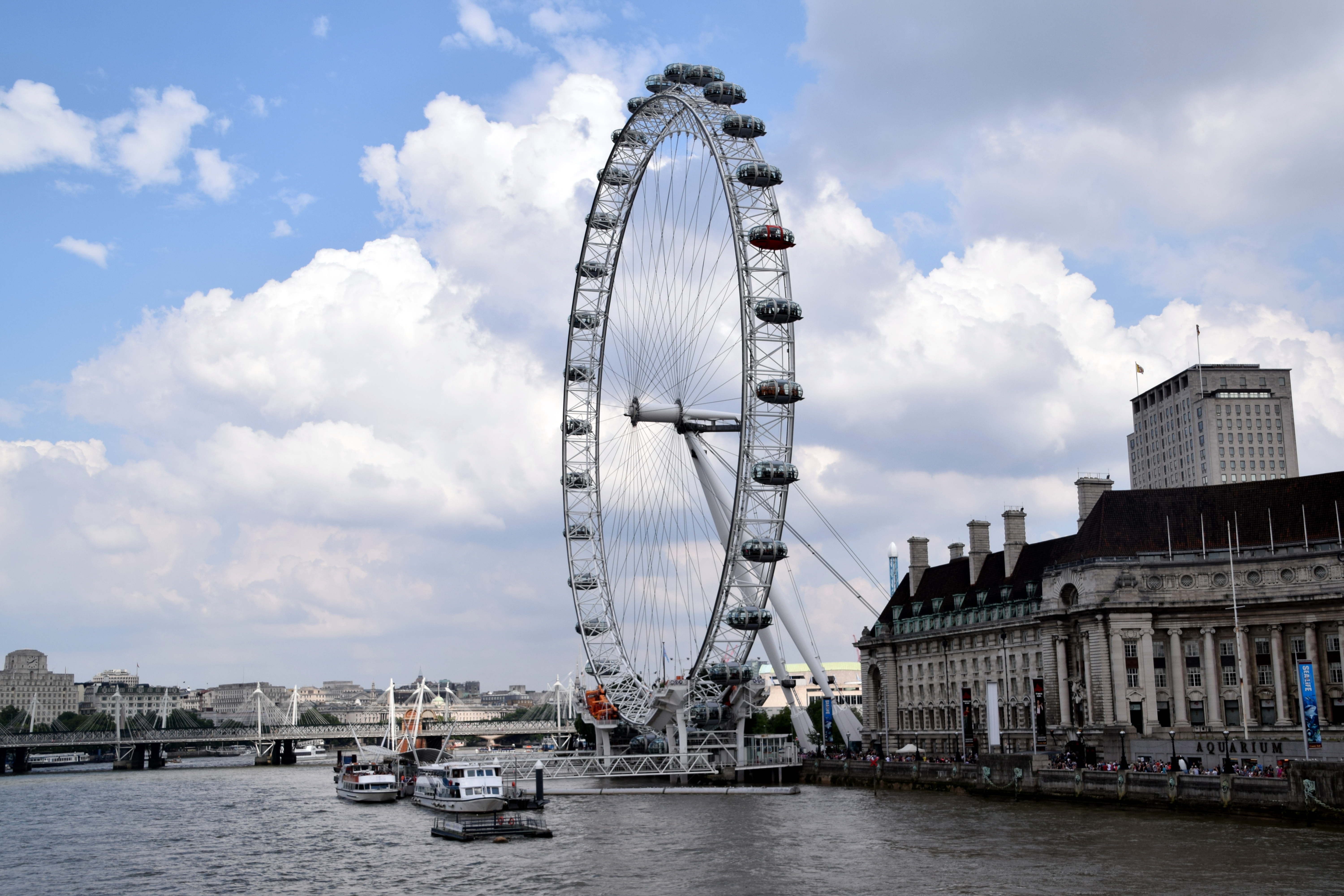
Believe it or not, my first trip to London was with a private jet client. I tell you this because no matter how much you traveled or how many times you’ve been around the world, there’s always room for another first. So how does an experienced crew member do sightseeing? Like a tourist of course.

My first day there was spent with my pilots who took me to some of their favorite spots. We went to a delightful Maille mustard store. Yes, the whole store dedicated to purveying fine French mustard. If you brought your own refillable crock (they each had one) you could refill it for free at the fresh draught bar. These were large pottery containers with a spigot on the bottom. The bar offered about 8 distinct blends. Different wines, spice and herbs created a variety the likes I had never seen. The store must have contained 25 varieties at least. I bought a crock and filled it and purchased a few extraordinary blends on that stop. Look it up if you get to London and are a bit of an epicurean.

DSC_0014

To keep the food theme going (food and beer dominated our stops) they took me to Harrod’s food court. Don’t make the mistake of likening this to a domestic mall food court in any way. The international gourmet options were just joyful to explore. Ok, taking more food home. Good thing we had plenty of room in baggage.

We squeezed in a walk by Kensington Palace, since we were staying in Kensington, before we commenced pub crawling to evaluate British brews. You just have to do this. Sit with the locals, ask their opinions and you are instantly part of the conversation.

DSC_0048

The next day I was on my own and went full, geeky tourist. I took a double decker bus around the city to get the big picture. Not recommended for August, when you spend hours sweating in the blazing sun. Good overview, though, so you can get your bearings in the town.

DSC_0013DSC_0011DSC_0007

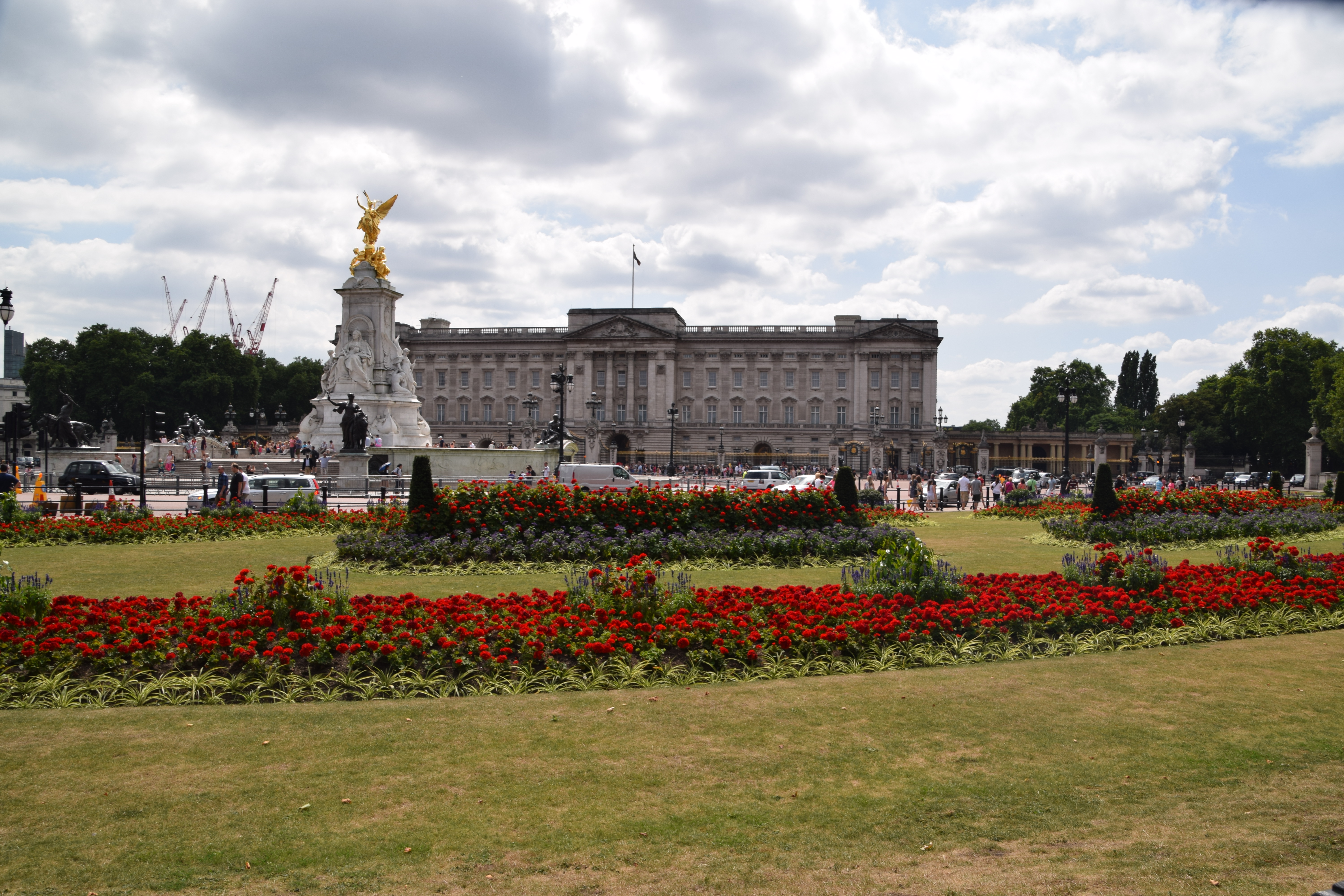
On the third day, I decided I enjoyed our walking tour more and resorted to one of my favorite go-to solutions for digging in to a new town. I pulled up Rick Steves’ walking tours of London and selected one that would focus on the sights I had found intriguing on the first 2 days. When traveling to new locations, you really should bookmark his page and try some well-researched walking tours. They are self-guided and you may linger where it suits you.

DSC_0035

Buckingham Palace

I fell in love with London and was so grateful for this in-depth introduction. Add London to your list and get out there and walk it! You won’t be sorry.

Importance of the Third Crewmember

Surprisingly we are still having discussions about the importance of a third crewmember on large cabin aircraft. Perhaps we have been discussing points that are simply too obvious and need to consider some of the benefits of a third crewmember that nobody really wants to think about. The things we are trained to do and keep current on, are often things nobody wants to talk about in everyday conversation. The things we think about during every takeoff and landing would make many passengers a bit nervous. Most would rather focus on our ability to prepare world-class cuisine and make the bedding look really pretty.

These are private jets where no expense has been spared to have the very best provisions for safety and security. Many are equipped with a Tempus unit *, defibrillator, MedAire subscription **, smoke hoods, and life rafts that are top shelf. It seems incongruent that the flight departments or corporations might think a third crewmember would be a luxury or unnecessary expense. When the third crewmember is viewed that way, it may be because the decision makers have become distracted by the “cabin attendant persona” who makes everything beautiful and presents five star cuisines. It’s human nature to focus on that, because nobody wants to think about what we’re really trained to do and how we support the operations of the flight department invisibly, if done correctly.

1. Flight deck support

A well-trained and experienced cabin attendant can ease the workload for the flight deck by completely managing the cabin. This allows the pilots to remain focused on flying and completing associated duties. They never have to divert their attention to maintaining a tidy cabin and lav, preparing and serving food, or checking to make sure everything is operating correctly in the aft section of the aircraft. The cabin attendant can also ensure that the pilots remain properly hydrated and nourished, as well as, provide breaks so they can maintain focus.

2. Medical first responder

Your third crewmember is trained as a medical first responder. Your pilots are trained as well, but you don’t want one of your pilots leaving the flight deck to assist while the other one manages an emergency landing to get a critically ill passenger to a trauma center. Perhaps you feel comfortable because you have a doctor on board as a passenger, but what if the person who becomes ill is the doctor? Having someone on board who is trained in field response for in-flight emergencies and has experience in triage assistance in case of an accident is not only a good idea, but a safe one.

3. Fire fighter

Your crew is trained to fight an in-flight fire. This is something nobody ever wants to encounter and tries very hard not to think about. If there is a fire, discovering it early is essential. Having a highly trained and experienced third crewmember is critical as a fire rarely starts in the cockpit. A third crewmember is trained to detect the first signs of any overheating or a hidden fire. They are trained to detect and fight fires behind the walls and under the floors. You don’t want to think about that. Flight attendants practice staying calm and fighting these types of fires with hands-on training every year. A third crewmember can be fighting the fire while both pilots concentrate on getting the aircraft on the ground safely, which is the first priority in a fire. You will be very glad to have a third crewmember on board in this situation.

4. Security detail

Welcome aboard, the cabin looks beautiful and pleasing every time of course. Your trained third crewmember can make the cabin look beautiful, but also focuses on every item in the cabin, allowing them to detect any new or unidentified items that are present while the pilots focus on flight related items. Security is always a top priority, but what if we were to learn in-flight that we have a bomb on board? Your third crewmember would know the safest location for it and how to build a safe compartment around it, while staying calm because they have practiced this annually. Your pilots know this too, but having a third crewmember allows your pilots to stay focused on flying and communicating with the ground, while the third crewmember deals with the threat. They have also been trained in hostage negotiation and defense tactics.

5. Flight department team member

The third crewmember can ease the load for your entire flight department by restocking the aircraft upon return from a mission. The cabin attendant knows better than anyone exactly what supplies have been depleted during a trip and can easily keep track and re-stock the aircraft upon return. Other duties can include management of linens and china, stocking items onboard , and maintaining passenger and crew profiles. This can free up your flight department for their main duties, such as dispatch and accounting.

6. Privacy

We might as well take a direct look at the elephant in the room and address the issue of privacy. This is the number one issue many private jet owners have with bringing a third crewmember on board. Please realize that a properly trained cabin attendant knows how to be available, but invisible. Discretion and owner privacy are top priorities. If you don’t feel like you can have your own space or your discussions are not secure, you don’t have the right crewmember. It’s that simple. Not every person will be the right fit for your operation, but it is worth it to find the one that will work with your needs and style, allowing your flight department to gain all of the benefits that a third crewmember can bring to your team.

Closing Thoughts

Try thinking about the third crewmember as an extended member of the flight deck crew and an addition to the flight department staff, as well as a fire fighter, emergency first responder, and security specialist who will also fill in as a culinary artist and concierge on the side. Maybe that will help define this role in a way that makes sense. There’s just so much of that role that people really don’t want to think about, but your third crewmember trains every year on many items to make sure they stay in top form. Your third crewmember is just like your fire extinguisher and your life raft. You really hope you’ll never have to use them for their true purpose, but you wouldn’t dream of not having those essential pieces of safety equipment on board for the one time that you do need them. The difference is you can actually use your third crewmember for so much more on every mission.

Resources in this article:

View original post: http://www.universalweather.com/blog/2014/10/completing-your-flight-department-the-importance-of-a-third-crewmember/#ixzz3GEuAne9o
Follow us: @universalweathr on Twitter | universalweathr on Facebook

Why Flight Attendants Matter in an Accident


retourch carol

In August of 1988, I had an experience that forever changed me as a flight attendant.  I flew the first leg of DL1141 from Shreveport to Dallas Ft. Worth and then handed the flight off to my colleagues as I did four mornings a week so they could continue on to Salt Lake City.  We chatted about how much orange juice was on board and where the passengers with special needs were seated.  I visited with many of my good flight attendant friends in the gate area who were headed to Salt Lake City for their annual recurrent emergency training and were waiting to board the flight as passengers. 

By the time I was home, I learned the worst… “my” plane had gone down  immediately after takeoff.

Many people survived that accident because they not only had the most senior crew in the base working the flight with vast experience, but they had 14 additional crew members scattered throughout the cabin on the way to their annual safety training.  These were the best possible folks to have on board during an accident.  They had just spent eight hours doing computer module training in aircraft safety and had to pass tests on that information before they could attend the “live” class. They were thinking about safety and little else at that point. 

You often hear how important it is to have a well-trained professional flight attendant crew on your aircraft, or in general aviation, to have an egress trained cabin attendant.  I thought it would be helpful to hear from one of the crewmembers on Delta #1141 who was on board that day deadheading.  I asked Kay Magruder to describe what it was like in the cabin when things started to go wrong and if trained personnel made a difference.  This is how she remembers the day’s events and how the crew impacted the outcome:


 As a member of a 757 F/A crew deadheading on the first leg of a turn-around, I was seated in 1A, which is the first row of FC, directly opposite the FC galley. 

In addition to my crew, there were 7 F/A’s going to recurrent, and a crew of 2 pilots flying back to base. 

We pushed back from the gate and taxied to take our place in line for takeoff.  It was a clear, sunny day, however we were delayed by ATC by about 30 minutes.  As we approached the active runway, I did my “silent” review, again being aware of the galley door directly across from me as my closest emergency exit.  As we began the takeoff roll, I became immediately aware of how long it was taking the pilot to “rotate” the plane.  As soon as we were airborne, we heard very loud “bangs” from the engines and realized that the pilot was struggling to keep the plane aloft.  Realizing that we were about to crash, my first thoughts were “this can’t be happening,” then “thank goodness I’m close to an exit” to help assist in evacuating.  After the initial impact, the plane skidded along the ground for what seemed like an eternity before coming to a stop.  There was debris everywhere, and a very strong electrical smell.  Dust filled the air, and smoke was already moving through the cabin up to FC.  I realized that the F/A’s on the front jumpseat were too badly injured to evacuate, and at the same time saw that the galley door across the aisle was blocked with debris and not a usable exit.  Turns out the entire right side of the plane was engulfed in fire, therefore making any evacuations to that side impossible.  The deadheading crewmembers seated in FC were yelling commands to help guide passengers toward the front to evacuate out the closest possible way, which happened to be a crack in the ceiling.  Miraculously, we were able to help many passengers escape this way. 

Every crash/accident is different, and though we are trained to evacuate any plane under any circumstances, evacuating this airplane was far more challenging.  The only usable exits were the 2 windows on the left side of the plane.  There was extensive structural damage throughout the fuselage, and many of us actually used these huge gaping holes in the ceiling to escape the burning plane.

Once outside the plane, all of us F/A’s that were physically able, assisted in aiding injured passengers and directing them away from the plane and to triage areas where emergency crews were setting up.  Of 107 total passengers (including crew), 14 perished.  Eleven lost their lives to smoke inhalation in the very back galley of the plane, despite the heroic efforts of the F/A’s who tried to open the jammed doors before being overcome from smoke themselves.

Two other passengers were found at the front of coach, though they left their seats, they obviously were unable to make their way through the smoke-filled cabin to escape.  One passenger, who went back into the burning plane looking for his wife, passed away in the hospital days later from his severe burns.

As a F/A, of course this is your worst nightmare.  But in truth, the intensive training that we receive initially and every year kicks in and you become that well-oiled machine that, though you hope you are never faced with such an event, are confident in and know that you can and do help save lives.  Cokes and peanuts aside, this is what being a trained F/A is really all about!  


It is obvious from Kay’s description that most of the options for evacuating that aircraft were never covered in any safety demonstration.  Years of training on how to think in an emergency made all of the difference in this situation and being prepared to react instinctively made the difference when seconds counted.


The accident involving Asiana #214, as tragic as it was, was also an incredible demonstration of the detailed training that professional flight crews maintain to handle such situations.  Chaos and panic could easily have prevailed when you look at that scene; instead that aircraft was emptied and passengers triaged.  Few people realize the very specific training flight attendants maintain to handle this kind of emergency.  A lot of people have been asking me what made this possible, so let’s take a look at what your flight attendant trains to do to help you in case of an emergency:


1.  Can flight attendants really get people out of an aircraft in 90 seconds, and how is that done?  Wouldn’t we need time to collect ourselves?


I thought this was a great question.  I have been doing this so long it is second nature and I don’t think about it.  Our goal is always to be able to empty an aircraft in less than 90 seconds.  It is a benchmark.  We just know you have to move fast.  We are always prepared to begin immediately because during every takeoff and landing we do something called a “silent review” in our minds.  When we sit down, we review the operation of our nearest exits, note alternates, scan the cabin once more for any unsecured items that might become projectiles, look for able-bodied assistants, note where those people are seated who might need extra help, review where the emergency equipment is in relation to our seat and then sit in a position that protects our body so we will have the best chance possible to successfully survive impact so we may immediately begin helping when the aircraft comes to a stop.  Then we watch the progress of the takeoff or landing and listen to all sounds and notice any unusual smells while repeating the bracing commands in our mind so we are ready to start reacting immediately if something goes wrong.  We may look like we’re thinking about our grocery list or ignoring you but we are mentally preparing for any sort of emergency.


2.  The next question I received was specific to Asiana #214 and I was asked why they only used some of the exits.


Part of our training is to think throughout an emergency.  When the aircraft comes to a stop, we go to our first choice of exit and assess conditions.  If there is fire or water outside that exit or the exit is jammed by impact, that exit is not usable and we move on to an alternate exit.  This is why we have been scanning the cabin for our alternates during our mental review so we aren’t stumped when this happens.  We only open exits that will allow safe egress and direct passengers towards those exits.


3.  Why do we have all of those bracing positions, how do they really help in that kind of accident?


By now probably everyone has watched the video and has a healthy respect for what kind of G-forces are involved when an aircraft lands badly.  By assuming an appropriate bracing position, you accomplish two main objectives.  The first objective; you get your head and torso below seat level so any flying debris in the cabin will not hit you.  Secondly, when you wrap your arms around your legs, or brace them on a seat back you keep them from flailing about and injuring yourself or others seated near you.  Remaining injury free is the first step in getting out of the aircraft.


4.  That fire looked terrifying… what if a fire started while a plane was in the air?


Every year we do hands-on fire fighting training to give us the best chance possible to achieve our goal of getting an aircraft back on the ground safely should we experience an in-flight fire.  This training has become increasingly sophisticated and even includes modules on handling lithium battery fires.  Often fires are in the walls of aircraft and unseen, so we are trained to detect them sooner by noticing odors, and then describing the color and texture of smoke to help determine the source.  We fight fires smarter now with better equipment and get an aircraft on the ground a lot sooner where the true professionals can help us.


5.  That scene on the ground looked so organized.  Are flight attendants trained to help with the aftermath of an accident?


In addition to getting everyone off of the aircraft, and doing a sweep of the aircraft to ensure all are safely off, flight attendants have extensive first aid training.  You may have had the opportunity to see a flight attendant respond to a heart attack or other medical emergency in flight, but this is just part of their knowledge.  Each year, part of our annual emergency training is a first aid module that includes instruction on how to work with the first responders who come to the aid of a downed aircraft to set up an effective triage system.  The very flight attendants who just endured the same horrific accident you did will help triage and then treat the injured passengers from their flight. 


This is just a sample of the very specific training a flight attendant receives to make each flight safe.   Add in how to handle a terrorist, a passenger with a psychotic break in-flight, and what to do if that plane lands in water or the wilderness and you get a more complete picture of what a flight attendant can handle.   Fortunately, the average passenger never sees any of these skills and they tend to think the flight attendants might be extraneous.  It took many years of repetitive training before I could react calmly and correctly to the crash scenarios or terrorist threats.   You would probably appreciate having a well trained professional on your flight should things ever get sporty.  Most folks will get that “deer in the headlights” look and not know what to do.  It would probably make some people uneasy if they focused on what flight attendants are really trained to do. These are things nobody wants to think about when they fly.  Your flight crew thinks about it every time they fly so you don’t have to.  The crew of Asiana #214 demonstrated with pure precision how all of that training and professionalism comes together to save lives.  I salute the crew of Asiana #214; they are indeed a tribute to our profession.


When Dogs Fly… Part 1

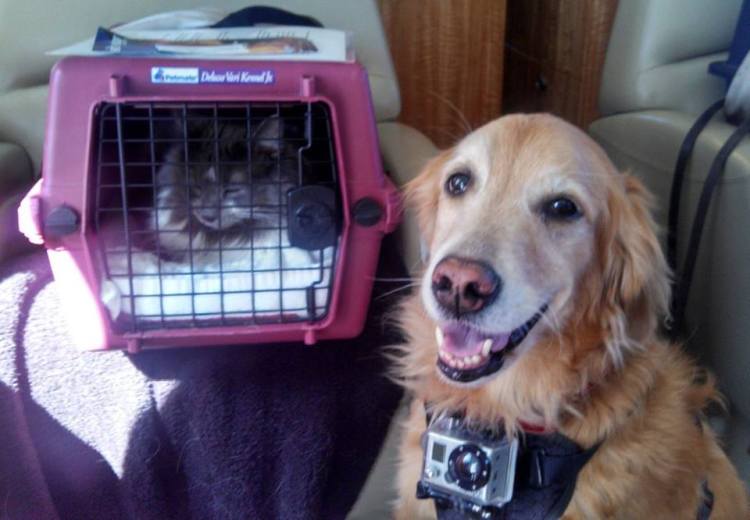
For those of you who travel with your fur kids on private jets, the challenge is to try to come up with a solution that will make air travel as safe and enjoyable as possible for your pet.  For that reason, we draw upon our years of experience of traveling with pets and observing their reactions to different situations to help us figure out what they like and don’t like and what some of their “pet peeves” are, if you will.  We want to share some of this information with you to help you better prepare for your next trip with your pet.  We travel on private jets with pets, but a lot of these considerations will make sense when flying on a commercial aircraft or even by car.

Image

First things first.  Does your pet like to ride in any vehicle?  If your pet freaks out in the car, then the car ride to the airport is going to send poor Bowser into a tizzy and it’s doubtful that riding on the plane will be much more enjoyable.  Start a few months out and introduce Bowser to the car slowly.  Get him the type of harness or crate you plan to use on the plane and go out to the car and just sit in the car in the driveway talking quietly until you can do so calmly. Our go-to harness is the RuffWear Load-Up harness.  Allow your pet to wear the harness walking around the house.  Slowly advance to backing the car out of the drive and then pulling back in.  Move on to a drive around the block.  Increase the length of trips only as your pet will allow.  Reward your pet generously for learning this new skill.  By the time you are ready to fly, your pet will be comfortable with his or her restraint system and traveling in a moving vehicle.  If you are using a crate, have the crate open where you watch TV with a soft blanket and toy inside so it becomes a safe place to hang out with you when you are all together.  Proceed to having your pet travel in the car in the crate which he or she now considers a “safe” place.

Image

Be sure to bring that much loved blanket or toy with you on your trip that is a smell that your pet recognizes in a new environment.  We always bring along a portable pet bed as well, and spray it with a relaxing pheromone spray that makes an inviting place for each pet to settle.  You can find some great travel dog beds at Ruffwear, and Kurgo.  The Pheromone Spray we use is D.A.P. Pheromone Spray.

One other pre-flight stress you can work on before you ever go to an airport is socializing your pet.  If your pet is flying on a private jet like our clients do, this isn’t much of a problem, but if you will have to transit a large airport and security screenings and your pet is a bit shy, this could start a trip off badly.  Gradually start taking your pet to places where there are more people present.  Perhaps go sit on a park bench where you can watch people at a distance.  Step it up to standing around in front of a store.  Finally go somewhere really busy where people might bump into your pet and interact with him or her.  Getting your pet used to being around people will not only make the trip easier, but will make your life easier and his or her life a lot more pleasant as well.

Image

Now we have a pet who is ready to go out and get on a plane and travel!  We’ll actually get on the plane next time…

**Our special thanks and fondest memories to (In order of appearance)

Surf Dog Ricochet, Buddy (Buddy’s Be The Dog Life) and Maxx. They have all graduated to the ultimate FURst class and fly free at the rainbow bridge.

When Dogs Fly…Part 2: Four Steps Before You Fly

ImageOk, last time we didn’t even get near an airplane.  There is plenty of prep you can do to make travel easier for your pet before you ever get to the aircraft.  After some fun work with lots of rewards, hopefully you now have a pet who is comfortable around strangers and with the restraint system that is going to keep him or her safe on board.  As I mentioned, we work with pets flying in the cabin on private jets, so that is how these tips are written, but you can get some good ideas from these articles.  If you have specific questions about commercial air travel or even car travel or camping, shoot me a note and I’ll try to help you out there too!

Image

The first thing to keep in mind the day of your trip is to allow plenty of time so you don’t start rushing around.  Getting everything packed up and in the car is stressful enough for your pet, you don’t need to ramp it up with rushing around and getting frustrated when they ask for a little reassurance that their world is ok.  The second thing to keep in mind is that everything will take twice as long as you anticipate, so allow a little extra time.  When you arrive at the FBO, have a walk-about and let your pet have one last relief break and stretch.  We always meet our guests with dogs out on the tarmac.  Some dogs get really excited meeting new people and jump around and show excitement in other ways that might damage the fine interior of a private jet.  It’s best to have that excitement outside…  If you are flying with a less “pet savvy” crew, invite them to meet you outside before entering the aircraft to make sure everything goes smoothly.

Image

Once you enter the aircraft, have a quick look around to make sure there aren’t any bowls of candy or flowers at grazing level for your pet.  We always “pet proof” our cabins, including using only cleaning products that are pet-safe, but usually when you enter your private jet there are pre-flight goodies set out for your enjoyment on the credenza (perfect for counter surfing!) along with flowers.  It is amazing how fast a dog can zero in on that and make the rest of your flight unpleasant at the very least.

Image

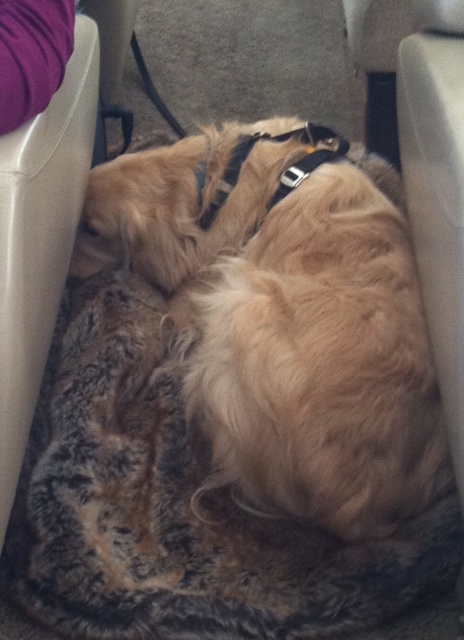
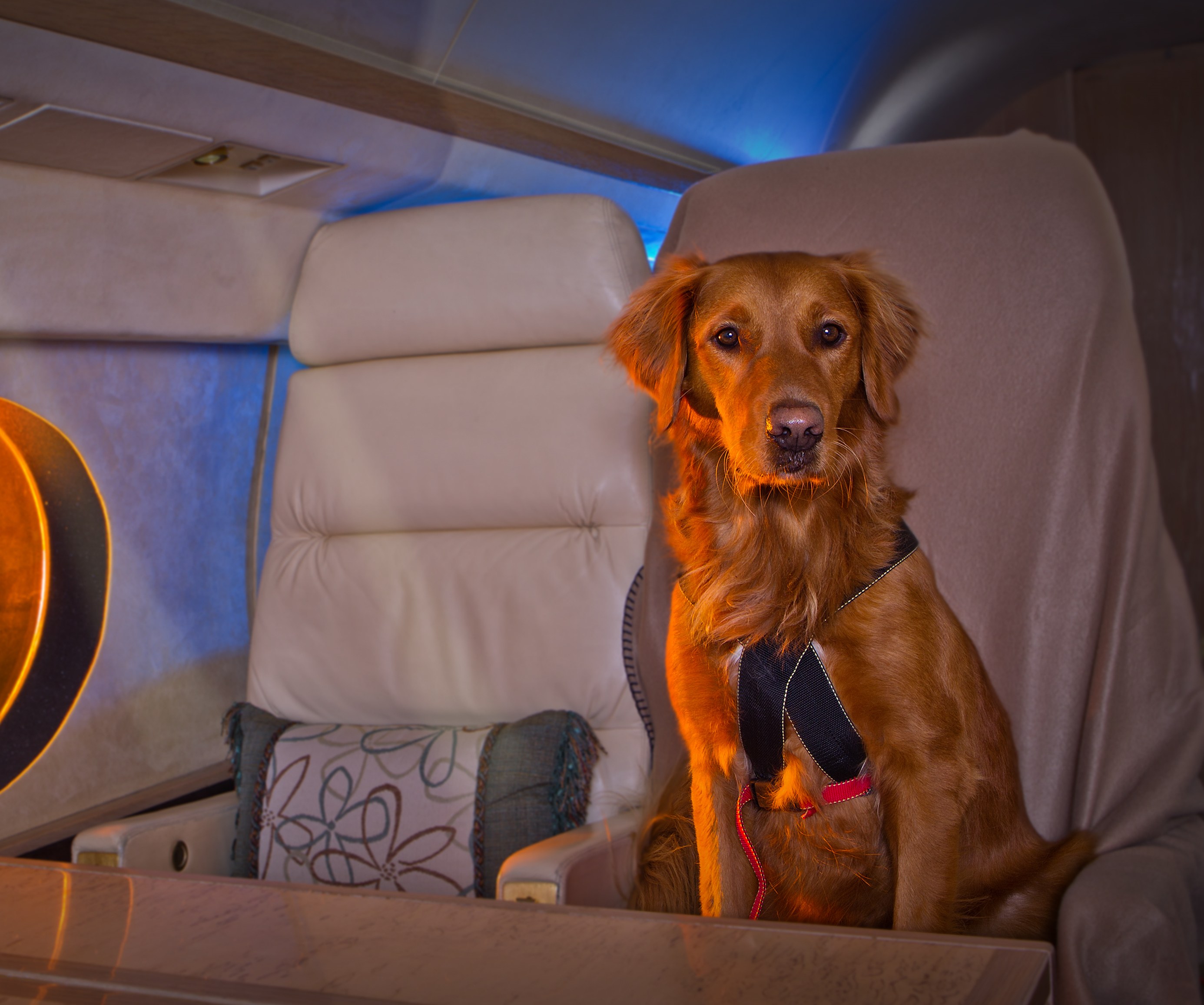
Next it is time to set up a safe place and home for your pet.  Most cats like to remain in their carriers and may be strapped into a seat with the existing seat belt assembly.  Most dogs prefer to have free reign of the cabin, but for their safety and the safety of the operation they need some boundaries.  We always set up a dog bed near their seat, or you can bring their favorite if you prefer.  The harnesses we discussed in our last post attach easily to the seat belt while still allowing them to sit up or lay down at their seat.  We also bring a longer tether for smooth in-flight use that allows them to roam a little more, but will prevent them from injury should we hit unexpected turbulence.  This also keeps them from taking to heart the phrase “dog is my co-pilot!”  The added bonus is that you may now relax without holding a leash or constantly watching to see where your dog might be during the entire flight.  Pretty much everybody is happy!  Add a favorite (or new and exciting) toy to the bed, and your dog has a comfy place to relax that feels like home.

Image

On our flights we introduce pet parents to a Pet Safety Briefing Card which is just like the one you have seen for humans.  It goes over what you are going to do to help your pet in the event of the emergency situations we brief you on at the beginning of each flight.  If you are on a flight with a crew that does not cater to animals that way, think ahead about what you will do if any of the situations occur that they brief you on.  Think through a plan.  You won’t be able to do that suddenly and in a panic, so just give it some thought when there is no emergency.  If you ever need to act, you will have a plan and be a much better guardian for your pet.  Now you can all settle in knowing you are well prepared and enjoy your flight.  We’ll give you tips on just how to do that next time.  Until then… enjoy the ride!

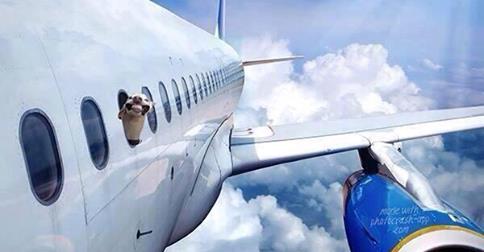
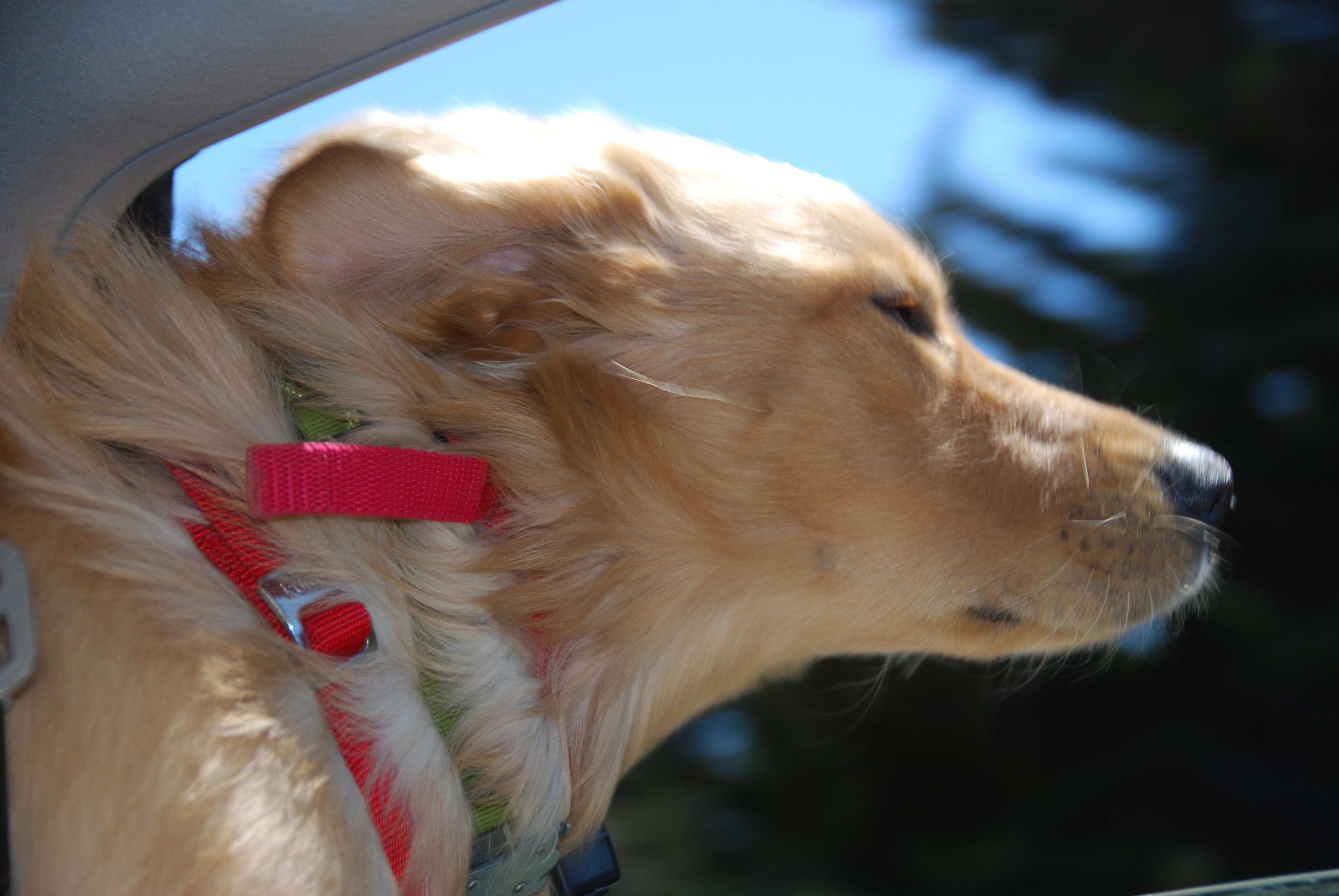
DSC_6259** No dogs have ever stuck their head out the window on one of our flights.  This photo was taken with a professional driver in extraordinary circumstances.  Please do not attempt on your private jet.

When Pigs (and Pets) Fly… Pets and Jets


It’s all pretty cut and dried when our furry family members travel on a commercial flight in a crate or in a carrier in the cabin. More and more folks are choosing to fly private now not only for their own comfort and convenience, but for the added benefit of being able to bring their best friend on board with them. How many of you have ever gotten a briefing from your crew on bracing positions for your pet in the event of an emergency? Have you ever given it some thought?
Kay and I are both licensed and experienced flight attendants who can shed a little light in this area. Probably your safest bet is to have an appropriately sized carrier stowed in the cabin with you, with blankets and pillows in it for padding and a strap to attach it to a secure fitting in the cabin. Do not stow this in the back of the luggage compartment which is tempting. Trust me, in the event of an emergency, you do not want to have to start rooting around in the storage area for the carrier. Place a lovely linen cloth over it and maybe some fresh flowers and you will never know it is there if it spoils the ambiance too much for you.
Be sure to consult with your crew on the best bracing positions for you and your pets if you should encounter sudden turbulence. Bracing positions will vary depending on the size of your pet and location in the cabin. The goal is to keep your pet from flying around in the cabin and contained in a small area. You may also consider bringing along the harnesses they make for cars to secure your pet to a seat if it gets “ruff” and please put a blanket under your pet as they will want to dig into that wonderful buttery leather with their claws, I can assure you.
Take a few moments to think through these things when you board and you can then relax and enjoy the wonderful service you and your furry friend so richly deserve.
And speaking of service;
No, it is not crazy to ask the crew to cater what your pet prefers and have your pet served. They like to be a part of the experience too! We actually find it kind of fun to serve our furry guests. Just like everything else in life, their gratitude is unconditional and makes us feel good too. Woof!